A sample can look ready for sale and still leave the factory with unanswered questions. If fill tolerance, artwork position, inspection limits and packing responsibilities are not written down, each production team has to interpret them again.
Approve a private-label supplier by checking the factory, material specification, fill tolerance, dust containment, construction, branding, packaging, inspection method and coded golden sample. A suitable partner can repeat that approved specification and disclose proposed changes before production begins.
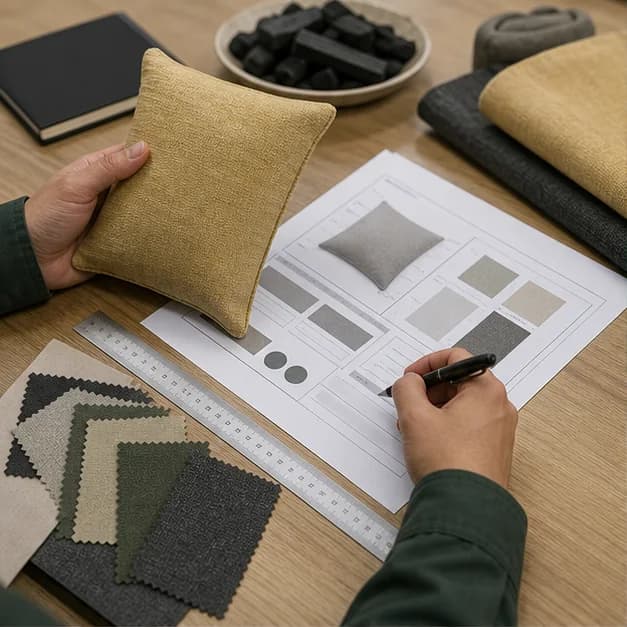
When I review a new program, I look for decisions that exist only in email threads or in someone's memory. Those are the details most likely to move during bulk production. The 12 checks below turn them into one approval file that the buyer and factory can use together.
What is the sourcing decision in one paragraph?
Choose a private-label bamboo charcoal bag supplier by comparing documented specifications and approval controls—not price, sample appearance or “premium” claims alone. A reliable sourcing file should identify the factory, charcoal material, fill tolerance, particle and dust limits, liner and outer fabric, seams and attachments, branding, retail pack, carton data, inspection method and retained golden sample.
When I review a sourcing project, I treat the sample as much more than a sales demonstration. It should become the technical and visual reference for bulk production and repeat orders.
This checklist is designed for importers, distributors, Amazon and retail brands, automotive-accessory buyers, home-care brands and pet-care category managers. It does not replace destination-market compliance advice, but it gives buying teams a practical structure for comparing suppliers.
What should a usable buyer brief contain?
I have found that vague RFQs produce vague quotations, even when the supplier is capable. Before contacting a manufacturer, define:
- Target market and sales channel
- Intended use and placement
- Product format and set count
- Reference dimensions and net fill
- Fabric, color and branding direction
- Retail packaging and barcode needs
- Target quantity and repeat-order forecast
- Required delivery window and destination
- Documents or testing expected by your market
- Claim language you intend to use
If an item is not yet known, label it “supplier recommendation requested.” That invites a clear proposal without allowing the unknown to disappear.
1. Who will actually manufacture the order?
Confirm the legal company name, operating address, contact details and the role of the organization quoting your project. Ask whether material preparation, filling, sewing, printing, packing and inspection occur in-house or through named partners.
Outsourcing is not automatically a problem. Hidden outsourcing is. Your goal is to understand who controls each step and who is responsible when an approved detail changes.
Useful evidence includes a live or recorded factory walkthrough, production-area photographs tied to the current location, business documentation, examples of process records and a clear explanation of subcontracted operations. Avoid treating a polished showroom photo as proof of every capability.
2. How should the charcoal be defined?
Record whether the product contains bamboo charcoal or activated bamboo carbon. Do not accept the two terms as interchangeable without documented activation.
The material section of the specification should include:
- Feedstock identity
- Processing description
- Particle presentation or range
- Color and visual reference
- Acceptable dust level
- Storage and handling conditions
- Documents and tests required for the destination market
If a performance claim names a specific chemical or removal percentage, ask which finished-product test supports it. A raw-material report does not automatically prove the performance of a sewn retail pouch.
3. Which particle and dust standards should be approved?
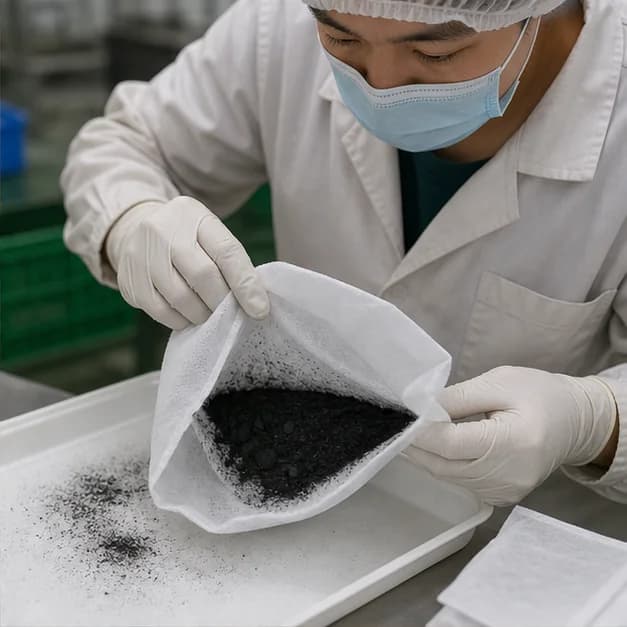
Charcoal can fracture during handling, filling and transport. Particle distribution affects finished thickness, settling and dust-control requirements.
Review the sample before and after normal handling. Check whether visible particles escape through the liner, seams, eyelet or closure. Define an acceptance method that both parties can repeat. “No leakage” is useful marketing shorthand but too broad for a factory inspection standard unless the test conditions are described.
A practical approval record includes photographs of the fill, a sealed reference sample and notes on acceptable surface dust after a defined handling check.
4. What net-fill tolerance should be locked?
Specify net charcoal fill separately from total product weight. Outer fabric, liner, eyelet, cord and label add weight and should not be mistaken for charcoal content.
Agree on the target net fill and checking method. NIST Handbook 133 provides a useful reference for verifying packaged net contents:
- Target net fill
- Permitted tolerance
- Scale resolution and calibration practice
- Sample size for in-process and final checks
- Action when results fall outside tolerance
For a product family, each SKU should have its own fill record. Do not assume the tolerance for a 50 g shoe pouch is appropriate for a 500 g home pouch.
5. How should the inner liner be reviewed?
The inner liner must support air contact while helping contain charcoal particles. BamveraEco offers a reference 65 gsm white SMS nonwoven inner-liner construction for selected programs. The final material, weight, seam and closure must be agreed through the sample.
Ask the supplier to show the liner before it is enclosed by the outer fabric. Record:
- Material and nominal basis weight
- Cut dimensions
- Seam and closure method
- Position inside the outer pouch
- Interaction with eyelets, cords or straps
- Dust-containment acceptance
If the liner changes after sample approval, the change should be submitted for review rather than treated as an invisible substitution.
6. Which fabric and construction details need approval?
Faux linen, woven and nonwoven fabrics can differ in weight, texture, breathability, color consistency and print behavior. A color shown on a screen is not a production standard.
Use a physical swatch or coded color reference. Confirm fabric face/back orientation, cutting direction, seam allowance, stitch density, corner shape and finished dimensions. For automotive or sun-exposed programs, review the expected heat and light conditions. For footwear, check abrasion and fit against representative shoe linings.
If a custom-dyed fabric is required, clarify whether the MOQ applies to fabric production, finished bags or both.
7. Which branding method matches the artwork?
Common private-label options include screen printing, heat transfer, side-sewn labels, face-sewn labels and embroidery. Each has different artwork, texture, cost and minimum-quantity implications. Our customization process shows how these methods connect with fabric and packaging decisions.
Approve:
- Artwork version and color mode
- Finished logo dimensions
- Position measured from pouch edges
- Print color or thread reference
- Acceptable alignment tolerance
- Label fold and seam placement
- Wash, rub or handling checks relevant to the application
Do not approve only a digital mockup. Review the logo on the actual chosen fabric because weave and color influence the result.
8. How should attachments be tested?
Eyelets, cords, hanging loops, straps and hooks affect both customer use and product integrity. They can also create placement risks if instructions are unclear.
For hanging products, confirm attachment material, dimensions, reinforcement and pull-test method. For vehicles, verify that the intended installation stays clear of visibility, pedals, controls, seat movement and safety equipment. For pet-area pouches, instruct users to keep the product away from chewing.
The attachment should appear in the golden sample and packaging instructions.
9. What should the golden sample represent?
I prefer to review the full product as one approval sample. An unprinted pouch followed by artwork approval in isolation leaves too many details disconnected.

The golden sample should represent:
- Final charcoal and net fill
- Finished dimensions and thickness
- Inner liner and closure
- Outer fabric and color
- Logo and attachment
- Unit set count
- Retail packaging, insert and warnings
Assign a sample code and approval date. Both buyer and supplier should retain a reference protected from contamination and fading. Photograph it with a ruler and scale record, but do not replace the physical sample with photographs alone.
Mid-article CTA — Turn your brief into an approval sample
Send your target market, use case, size, fill, fabric, logo, packaging and quantity. BamveraEco will identify open decisions before sampling.
10. Which production and inspection plan should be agreed?
Quality control should answer what will be checked, when, how many units and against which limit.
A practical plan can include:
- Incoming material verification
- First-piece approval
- In-process fill-weight checks
- Seam, dimensions and attachment checks
- Artwork position and appearance
- Finished-goods sampling
- Pack count, barcode and carton verification
- Shipment photographs and retained production samples
Some buyers use an acceptance-sampling standard such as ISO 2859-1 or a third-party inspection company. If so, specify the inspection level, AQLs, defect categories and responsible party in the purchase agreement. Do not assume “AQL inspection” has one universal meaning.
11. When should retail packaging be approved?
Packaging must protect the product, communicate use and meet the target channel's operational requirements.
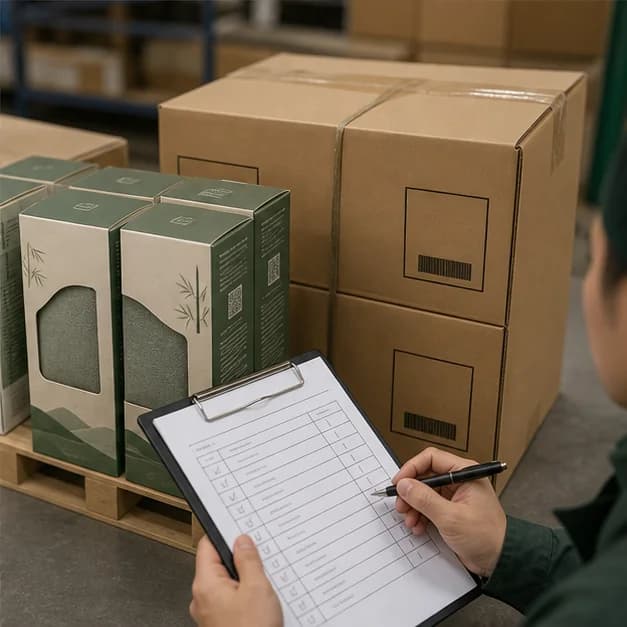
Options may include one pouch per OPP bag, several pouches per bag, printed film, kraft box, color box or a buyer-developed pack. Confirm material, dimensions, seal, ventilation needs, warning copy, barcode area, set count, inserts and translations. The GS1 barcode standards provide a neutral reference for globally recognized identification and barcode structures.
Check whether the artwork makes unsupported environmental, health or performance claims. Objective claims need evidence, and requirements vary by destination market. The FTC Green Guides provide useful principles for clear environmental marketing claims in the United States, but local legal review remains the buyer's responsibility.
12. Which logistics and change-control details should be frozen?
Before shipment, confirm the commercial term using the ICC Incoterms rules and document the named place:
- Incoterm and named place
- Unit, inner-pack and carton quantity
- Carton dimensions, net and gross weight
- Shipping marks and labels
- Pallet or floor-loaded configuration
- Required documents
- Inspection release point
- Procedure for specification changes
Sea, air, rail and door-delivery options have different cost, time and handling profiles. Select transport after final carton data is available, not from an early estimate based on pouch weight alone.
Any change to material, liner, color, logo, fill, packaging or carton after approval should be documented and re-approved where it can affect function, appearance, claims or compliance. For US-bound programs, US Customs and Border Protection country-of-origin guidance is a useful starting point for reviewing marking responsibilities.
How can buyers compare shortlisted suppliers?
Use a weighted score rather than choosing the lowest unit price.
| Area | Suggested weight | Evidence to compare |
|---|---|---|
| Material and claim clarity | 20% | Written charcoal specification and supporting documents |
| Sample fidelity | 20% | Complete coded sample and measurable tolerances |
| Construction and dust control | 15% | Liner, seams, closure and handling review |
| Manufacturing control | 15% | Process ownership and inspection records |
| Branding and packaging | 10% | Actual-fabric sample, dieline and packing plan |
| Communication and change control | 10% | Version control, open-issue list and response quality |
| Commercial and logistics fit | 10% | MOQ, lead time, carton data and Incoterm clarity |
I would adjust the weighting for the actual program rather than use the table mechanically. An automotive buyer may give more weight to material review and attachment safety. A retailer launching several colors may prioritize artwork and batch consistency.
Which warning signs deserve attention during sourcing?
- The material is called charcoal, activated carbon and “carbon crystal” interchangeably.
- A removal percentage is provided without a named test method and sample identity.
- Net charcoal fill is confused with total pouch weight.
- The supplier will not show the inner liner or explain the closure.
- Every fabric and packaging option is offered at the same low MOQ without explanation.
- The quotation has no artwork, packaging or carton assumptions.
- The bulk order may use “similar” material without change approval.
- The supplier resists a coded golden sample or measurable tolerances.
- Inspection is described only as “100% QC” without records or criteria.
One warning sign does not always disqualify a supplier, but it requires a clear answer before payment or production.
What should an RFQ template include?
Copy this structure into your inquiry, or use our project inquiry checklist to send the same decisions to the factory:
Market and channel: Country, retail/e-commerce/distribution Application: Shoes, closet, vehicle, dry pet area or other Format: Dimensions, shape, attachment and set count Charcoal: Material description and reference net fill Construction: Inner liner, outer fabric, color and seams Branding: Method, logo size, colors and artwork file Packaging: Unit pack, box/bag, inserts, barcode and warnings Quantity: Sample quantity, first order and annual forecast Quality: Required documents, tests, tolerances and inspection Logistics: Destination, Incoterm request and delivery window Open items: Areas where supplier recommendation is requested
This format helps suppliers quote the same scope and makes price comparisons more meaningful.
What do buyers frequently ask before supplier approval?
What is a reasonable MOQ for custom bamboo charcoal bags?
BamveraEco publishes a reference MOQ from 2,000 bags for selected standard configurations. Custom-dyed fabric, embroidery, special packaging or nonstandard fill can increase the final MOQ. Ask which component creates the minimum.
How long does sampling take?
It depends on material availability, logo method, packaging and the number of revision rounds. Request a milestone schedule for specification confirmation, physical sample, artwork approval and final golden sample rather than one unsupported date.
Should I pay for samples?
Policies vary. More important than the fee is whether the sample includes production-intent materials and a written specification. A free generic sample may not validate a custom program.
Can a factory guarantee odor-removal performance?
A supplier can manufacture to an approved specification, but application performance depends on conditions and claims need suitable evidence. Ask for the exact test, sample identity and conditions behind any guarantee.
What should a pre-shipment inspection include?
At minimum: quantity, product identity, net fill, dimensions, construction, visible dust, logo, attachments, pack count, barcode and carton data. The buyer should define sample size, defect classes and acceptance limits.
Do I need third-party testing?
That depends on materials, claims, destination market, retailer requirements and risk. Ask a qualified testing or regulatory adviser to define the appropriate scope. Do not order a generic “full test” without identifying what decision it supports.
How do repeat orders stay consistent?
Maintain an approved specification, coded golden sample, artwork version, packaging files, tolerance records and change-control procedure. Confirm all revisions before each purchase order.
Conclusion: What is the safest way to approve a supplier?
A private-label charcoal bag is a small product with many connected decisions. Material identity affects claims. Fill and liner affect handling. Fabric affects breathability and branding. Packaging affects instructions, logistics and customer expectations.
My final test is simple. Can the supplier turn the buyer brief into a clear, reviewable and repeatable specification, and will the team speak up when something must change? That matters more than the lowest quotation or the most attractive generic sample.
Final CTA — Review your private-label brief with the factory
Send your application, target quantity, size, fill, fabric, logo and packaging files. We will return the open specification questions and a sampling route.