
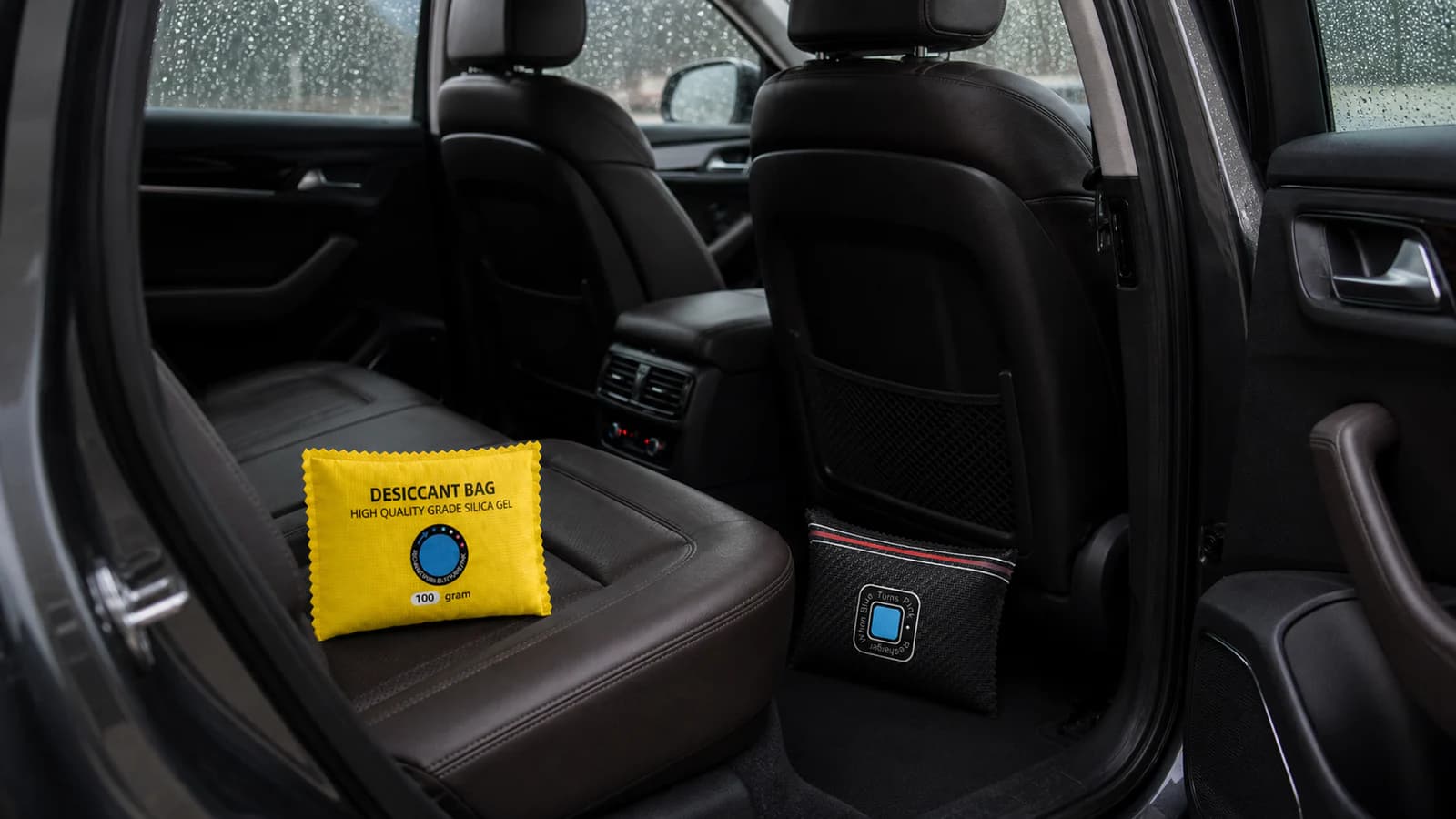
Moisture inside a car is more than an inconvenient mist on the windscreen. Wet floor mats, damp clothing, blocked drains, damaged seals and ordinary temperature changes can all raise cabin humidity. The right solution begins with finding the water source, not buying the largest absorber on the shelf.
Start by removing wet items, drying visible water, checking for leaks and using the vehicle's ventilation or climate controls correctly. A reusable silica gel dehumidifier bag can then help manage residual airborne moisture, especially while a vehicle is parked, but it cannot repair ongoing water ingress.
When buyers ask me whether a car dehumidifier bag "works," I first ask what they expect it to fix. In sample reviews, that one question separates a useful moisture-control accessory from an impossible product promise. This guide uses the same diagnostic approach for drivers, retailers and private-label teams.
Why does moisture collect inside a car?
Moisture collects when water enters the cabin or water vapor condenses on a surface that is colder than the surrounding air. Passengers, wet items, leaks, blocked drainage and humid outdoor air can all contribute.
Condensation is a physical change, not a product defect by itself. In its explanation of dew point, the US National Weather Service identifies it as the temperature at which water vapor begins to condense. In a car, glass often cools faster than the cabin air, so moisture becomes visible on the windscreen and windows first.
Some moisture sources are temporary. A wet umbrella, snowy shoes, damp sports equipment or several people breathing in a closed vehicle can raise humidity during one trip. Other sources persist: a leaking door seal, sunroof drain, heater matrix, air-conditioning drain or poorly dried carpet can keep adding water after the visible glass has been wiped.
That distinction matters. A passive moisture absorber may be useful for a closed cabin with a modest residual moisture load. It will be overwhelmed if water continues to enter or if soaked padding remains under the carpet.
What should you check before using a car dehumidifier?
Check whether the moisture is mainly airborne, carried in by people and wet objects, or entering through a fault. Dry the cabin and address active water sources before asking a passive bag to maintain the result.
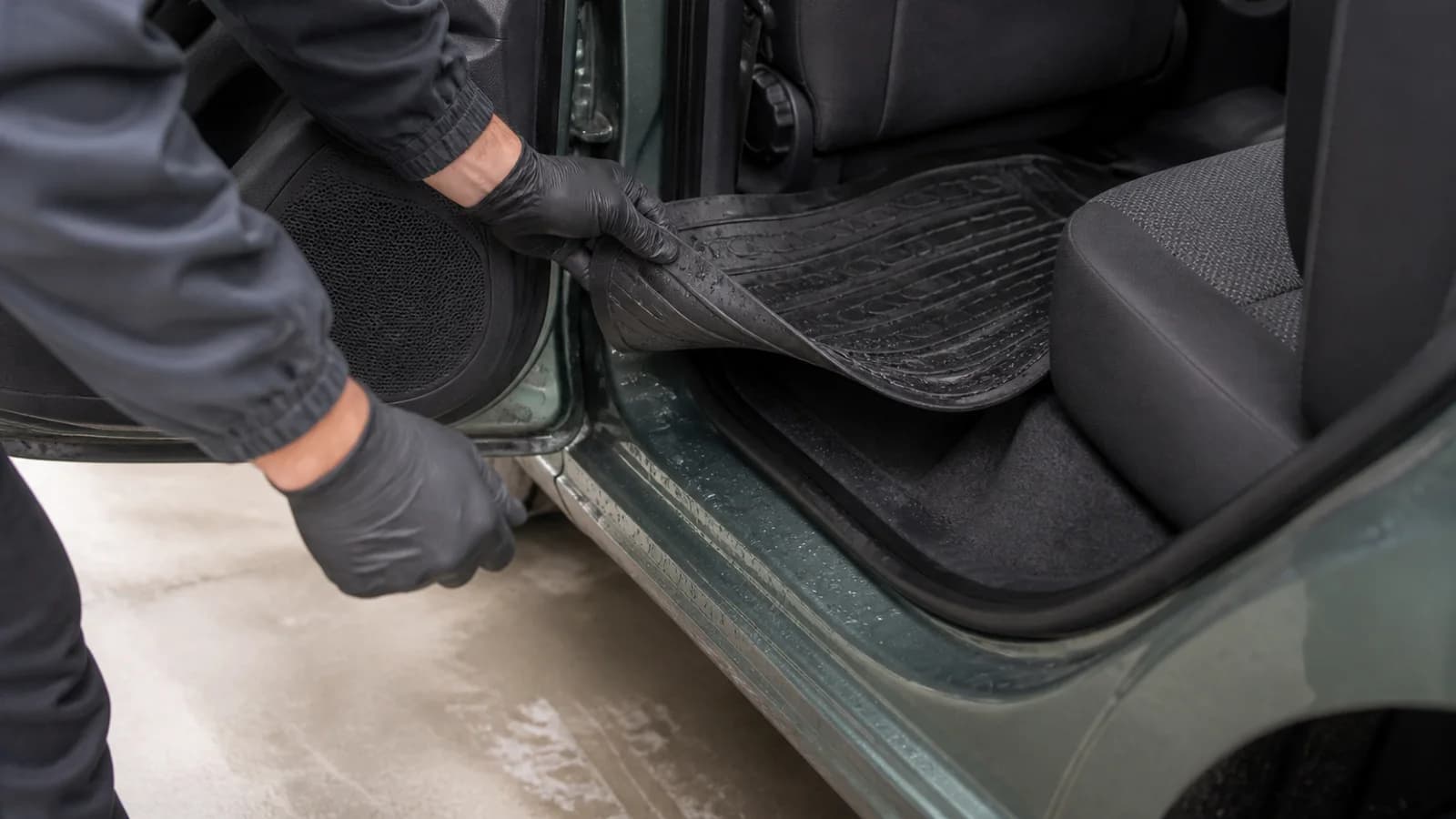
Use the pattern of dampness as a clue rather than assuming every misted windscreen needs the same remedy.
| What you notice | Likely source to investigate | First action | Role of a dehumidifier bag |
|---|---|---|---|
| Light morning mist after wet-weather driving | Moist air trapped in a cooling cabin | Remove wet items, ventilate and dry glass | May help with residual moisture while parked |
| One footwell repeatedly wet | Door seal, drain, body seam or carried-in water | Lift the mat, dry the area and inspect the entry point | Not a repair; useful only after the source is controlled |
| Sweet smell, oily film or falling coolant level | Possible heater or cooling-system fault | Stop guessing and arrange qualified mechanical inspection | No meaningful role until the fault is repaired |
| Dampness after interior shampooing | Water retained in carpet, seats or padding | Extract water and provide thorough airflow and drying | Can support final drying, not replace bulk water removal |
| Condensation during long seasonal storage | Humidity cycling in a closed cabin | Store the vehicle dry, inspect seals and allow safe airflow | Often a practical maintenance use when monitored |
| Wet cargo from pets, workwear or sports gear | Repeated moisture introduced by use | Remove or dry the cargo after each trip | Can help between trips if capacity and placement are suitable |
Press a clean dry cloth against the carpet in several places, including below removable mats and in the luggage area. Check the spare-wheel well if the vehicle has one. Look for water trails around seals and trim, but do not remove safety-related panels unless you know the correct procedure.
For persistent or unexplained dampness, a technician can inspect drainage and hidden areas more safely. The goal is to distinguish a small humidity-management job from a water-ingress problem that needs repair.
How can you get moisture out of a car safely?
Remove liquid water and wet materials first, then combine drying, ventilation and the vehicle's approved demisting controls. Use a passive absorber afterward to manage the smaller amount of water vapor left in the enclosed space.
Begin with simple physical removal. Take out wet umbrellas, coats, towels and loose mats. Blot or extract standing water instead of waiting for the cabin air to carry it away. If carpet or seat padding is soaked, surface drying can be misleading because the material below may still hold substantial water.
Next, create airflow under conditions that do not introduce more rain or unsafe heat. Follow the vehicle manual for heating, air conditioning, fresh-air and demist settings. Air conditioning can remove moisture from moving cabin air, while warm airflow helps moisture leave a cold surface. Exact controls differ by vehicle, so the owner's manual is more reliable than a universal button sequence.
Keep the windscreen clear before driving. The UK Highway Code guidance on vehicle maintenance and safety says that windscreens and windows must remain clean and free from obstructions to vision. A loose bag on the dashboard is therefore a poor placement choice even if it is sold as a windscreen dehumidifier.
If the vehicle can be parked in a dry, secure and ventilated place, opening doors for a controlled period can help exchange humid cabin air. Do not leave a vehicle open unattended or use a mains appliance through an unsafe extension lead. Large water loads call for proper extraction and drying equipment, not a pile of small sachets.
The US Environmental Protection Agency makes the same broader point in its guide to mold and moisture control: fix leaks, dry wet materials promptly and reduce the moisture source rather than relying on humidity control alone. Although a car is not a house, source control remains the sensible first step.
When does a reusable silica gel dehumidifier bag help?
A reusable silica gel bag is most useful for moderate residual humidity in an enclosed car, trunk, RV or storage compartment. It is a maintenance accessory, not an emergency drying machine or leak repair.
Silica gel is a porous, hygroscopic material used as a desiccant. The National Library of Medicine's PubChem record for silica gel describes it as a non-crystalline form of silicon oxide with moisture-absorbing properties and lists it among hygroscopic agents. In a breathable pouch, the material can take up water vapor from the surrounding air until its available capacity declines.
That gradual action suits periods when the car is closed and no powered system is running. It can be useful after normal wet-weather use, during seasonal storage, or in a trunk that carries occasionally damp equipment. It may reduce the moisture available to condense, but results vary with cabin volume, temperature, starting humidity, ventilation, water sources, fill weight and how saturated the desiccant already is.
If you are deciding between a passive bag, a powered unit and a liquid moisture absorber, our car dehumidifier comparison explains where each approach fits and what tradeoffs to check.
Our reusable silica gel car dehumidifier bag page shows 100g, 200g and 400g reference formats with a moisture indicator. Those weights are development starting points, not universal coverage ratings. A compact city car, large SUV, camper and boat cabin do not present the same air volume or moisture load.
The clearest claim is narrow: the bag supports moisture management in an enclosed space. It should not promise to prevent every instance of condensation, eliminate mold, purify the air or make a leaking vehicle dry.
Developing a car-care range?
Review the reusable car dehumidifier formats, indicator options and private-label details.
Send the intended vehicle, placement and pack quantity for a sample discussion.
How should a car moisture absorber be placed and monitored?
Place the bag where air can reach its breathable surface and where it cannot move into pedals, seat rails, controls, vents or the driver's field of view. Check the indicator or care schedule instead of leaving it forgotten.
A stable trunk corner, secured rear footwell area or protected storage compartment is usually more sensible than the dashboard. The exact location depends on bag dimensions and the vehicle layout. Review the automotive interiors application page for placement questions that should be resolved during product development.
Do not seal the working pouch inside its retail plastic bag. Do not cover the breathable surface with luggage. Keep it away from spills, sharp cargo, children and pets, and remove it if the fabric, seam or indicator window is damaged.
Many reusable products use a color indicator to show when drying is due. The indicator chemistry, dry color, saturated reference and care instructions should be verified for the specific product. Color alone is not a laboratory measurement of cabin relative humidity, and different indicator systems should not be treated as interchangeable.
Regeneration also belongs to the finished bag, not to silica gel in isolation. Fabric, print, seams, indicator window, fill weight and heating method all affect the instructions. Follow the approved label. Do not copy microwave timing from another brand or another bag size, and stop using a product that shows scorching, seam failure or window damage.
Can the same moisture absorber be used at home?
Sometimes, provided the space is small, the placement is dry and protected, and the approved instructions allow it. A reusable car bag can suit closets or storage cabinets, but it is not a substitute for a room dehumidifier or building repair.
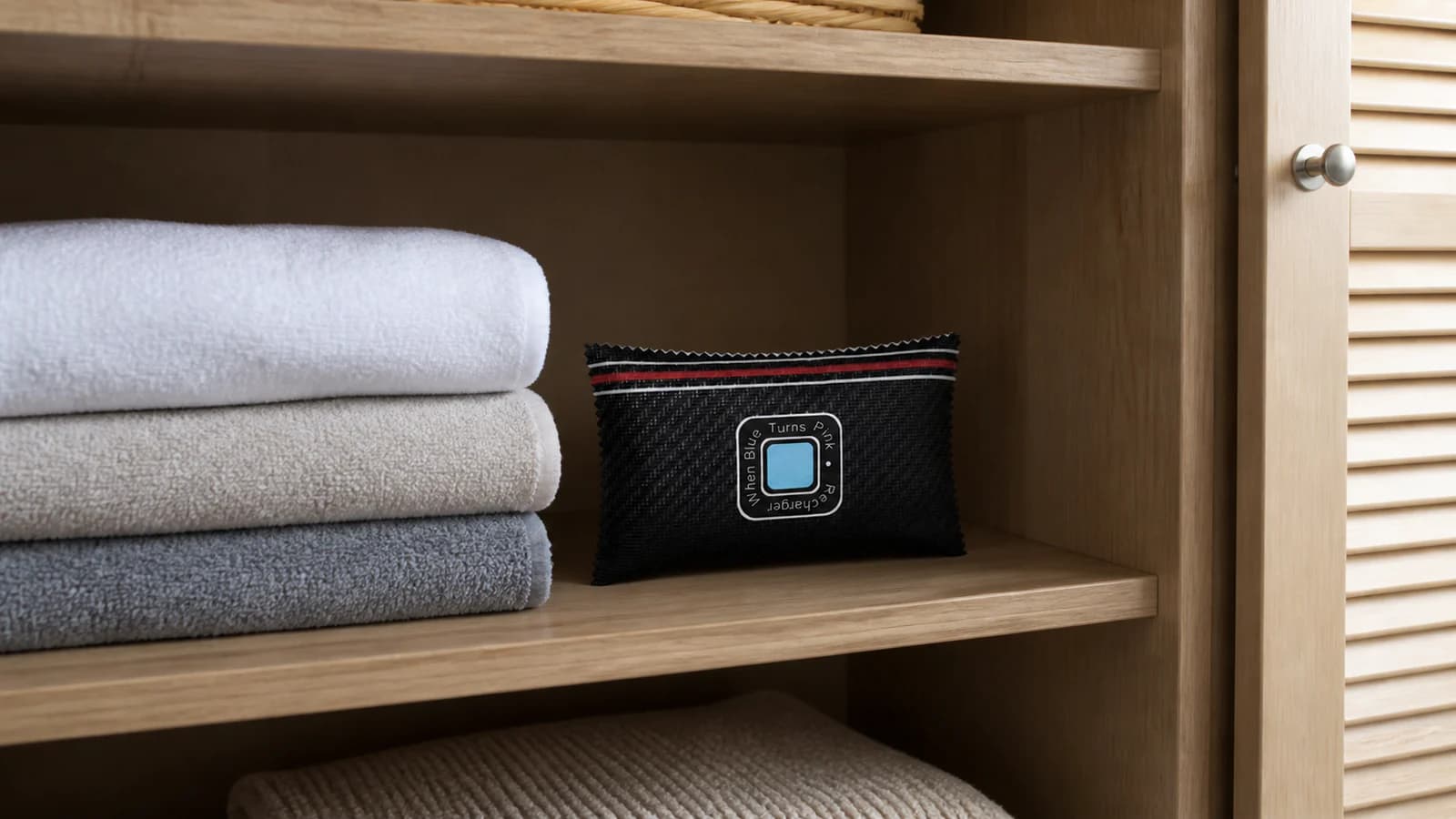
The underlying moisture-control job is similar in a closed vehicle, wardrobe, utility cupboard or small storage compartment. The scale is not. A compact pouch may help buffer normal humidity changes around stored textiles, tools or seasonal items. It will not keep up with an active plumbing leak, a wet basement wall or steam continuously entering a room.
Home placement introduces different considerations. The bag should stay clear of food unless the complete product is approved for that use. It should be protected from children and pets, and it should not rest directly against delicate surfaces if the care instructions warn about heat after regeneration or possible color transfer.
For retailers, this cross-use potential can support a broader storage-care range, but the package should name realistic spaces rather than implying whole-home coverage. Car, RV, camper, wardrobe and cabinet applications can share one product platform only when the instructions, pack size and imagery remain accurate for each use.
What should importers specify before approving an order?
An importer's sourcing brief should define the silica gel, fill weight, finished dimensions, fabric, indicator system, regeneration method, warnings, unit pack and evidence behind every performance claim.
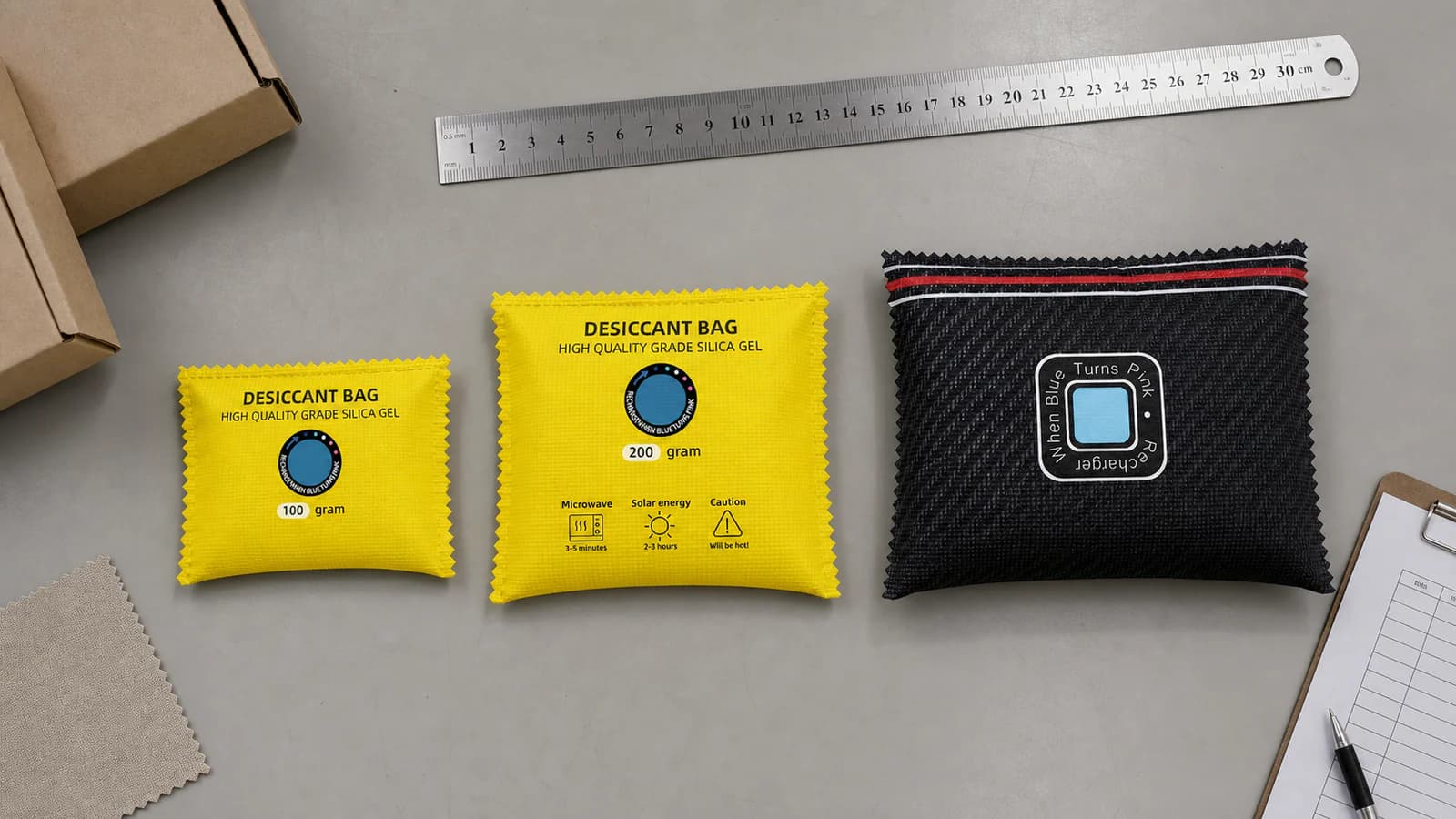
When I review a new program, I compare the proposed retail promise with the physical sample. If the front panel says "reusable," the care method must work for the final fabric, print and indicator. If it says "400g," the factory and buyer need an agreed net-fill control rather than a nominal number copied from a quotation.
| Decision | What to approve | Why it matters |
|---|---|---|
| Intended application | Vehicle class, home space, placement and expected moisture pattern | Defines a realistic use case and product size |
| Desiccant | Silica gel specification, bead condition and agreed indicator chemistry | Prevents material substitutions and unclear color behavior |
| Fill and dimensions | Nominal net fill, tolerance, cut size and finished thickness | Keeps cost, capacity, appearance and packaging aligned |
| Outer construction | Breathable fabric, seam, print and indicator-window security | Affects air contact, durability and regeneration suitability |
| Care system | Approved drying route, cooling guidance, warnings and replacement signs | Makes reuse understandable and reduces unsafe improvisation |
| Retail pack | Barrier pack before first use, instructions, barcode, set count and carton | Protects dry capacity and keeps the offer clear |
| Claims | Exact wording and product-specific support | Prevents broad promises that the sample cannot substantiate |
Net-content requirements vary by destination market. For US packaged goods, the current edition of NIST Handbook 133 provides procedures for checking packages labeled by weight. Buyers should have their compliance team confirm applicable labeling rules and then translate them into a practical factory inspection method.
Claims deserve the same discipline. Under the US Federal Trade Commission's policy on advertising substantiation, advertisers need a reasonable basis for objective claims before publishing them. A material datasheet can explain silica gel, but it does not automatically prove how much condensation a finished pouch will prevent in every vehicle.
Our customization guide covers fabric, logo, indicator placement, care information and retail packaging. A useful golden sample should combine those details with the final fill and the actual regeneration instructions.
What questions do buyers and drivers ask most often?
Most questions come back to the same boundary: remove active water first, then use a correctly sized and maintained bag for residual moisture.
When should a dehumidifier bag be added after drying the car?
Add it after the leak, standing water and soaked materials have been dealt with. The bag can then help manage residual airborne moisture while the vehicle is parked. Our car dehumidifier bag evidence guide explains how to judge the result without expecting the pouch to perform a repair or bulk-drying job.
How many dehumidifier bags should I put in a car?
There is no reliable universal number. Consider vehicle volume, moisture load, bag fill weight, placement and how often the bag can be checked and regenerated. Start with the approved supplier recommendation and validate it in the intended use case.
Where is the best place to put a dehumidifier bag?
Choose a stable, exposed location away from pedals, controls, seat mechanisms, vents and sightlines. A secured rear floor or trunk position is often more practical than a dashboard.
Can a moisture absorber stop windscreen condensation overnight?
It may reduce available airborne moisture, but overnight condensation also depends on glass temperature, ventilation, wet materials and water ingress. Treat absolute "no condensation" promises cautiously.
Can I dry a reusable silica gel bag in a microwave?
Only if the complete product's approved instructions explicitly allow it. Timing and power depend on the exact fill, fabric, printing, seams and indicator system. Never borrow instructions from a different product.
What if the car still smells damp after the visible water is gone?
Check hidden carpet and padding, the luggage well, drainage and cabin filter area as appropriate for the vehicle. Persistent dampness or visible growth calls for qualified inspection and cleaning rather than more fragrance or desiccant.
Conclusion: what is the practical way to keep a car drier?
Find and control the moisture source, remove bulk water, dry the cabin, use the vehicle's approved demisting system and add a monitored silica gel bag only for the residual moisture-management job it can reasonably perform.
This sequence is less dramatic than promising one accessory will solve every damp-car problem, but it is far more useful. Drivers get a clearer diagnosis. Retailers get fewer unrealistic expectations. Product teams get a defensible brief covering application, fill, placement, care and claims.
Planning an automotive or home-storage moisture absorber range?
Send your target use, fill weight, quantity, indicator and packaging requirements.
We will recommend a practical sample route for review.