
Two charcoal pouches can look almost identical on a retail shelf and still behave very differently after unpacking. The difference usually appears in the charcoal, liner, airflow and instructions, not in the front-label promise.
Bamboo charcoal bags can support passive odor control when air reaches suitable porous charcoal. Results depend on the odor source, charcoal specification, net fill, pouch breathability, placement and surrounding conditions. They do not replace cleaning, ventilation or removal of the source.
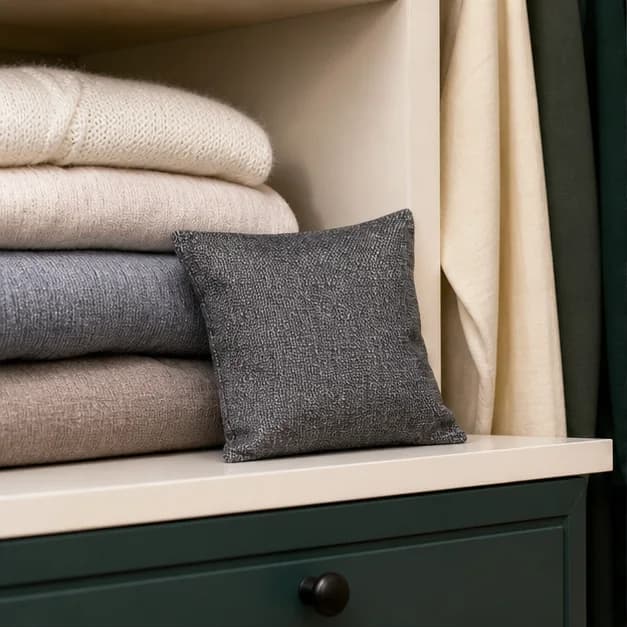
When a buyer asks whether these bags work, I first ask where the pouch will sit and what is causing the odor. Those two answers shape the sample, the test and the claims. This guide shows how I review each part before a private-label program moves forward.
Do bamboo charcoal bags really work?
Yes, bamboo charcoal bags can support odor control in the right conditions, but they are passive adsorbent products, not powered air purifiers. The US EPA guide to air cleaners and filters is a useful reminder that filtration products do not replace cleaning, ventilation or removal of the odor source.
Carbonized bamboo has a porous surface. When air reaches that surface, some odor-causing molecules can be held by adsorption, the surface process described in Britannica's adsorption overview. The result depends on more than the words “bamboo charcoal” on a package. Charcoal specification, particle format, net fill, pouch breathability, airflow, humidity, temperature, enclosure size, placement and the odor source all affect the finished product.
When buyers ask me whether bamboo charcoal bags work, I rarely answer with a simple yes or no. I first ask where the pouch will be used, what is causing the odor and what the finished construction looks like. For a private-label buyer, the more useful question is:
Does this documented charcoal-and-pouch specification provide a useful, repeatable odor-care experience in the intended application?
In my experience, the answer becomes much clearer when we review the material documentation, compare controlled samples and run a realistic use trial. An unsupported universal promise does not tell a buyer how the finished product will behave.
How do bamboo charcoal bags adsorb odors?
Bamboo is heated in a low-oxygen carbonization process to create charcoal. Carbonization removes much of the volatile material and leaves a carbon-rich structure with pores and surface area. A breathable pouch allows surrounding air to contact the charcoal while an inner layer can help contain particles and dust.
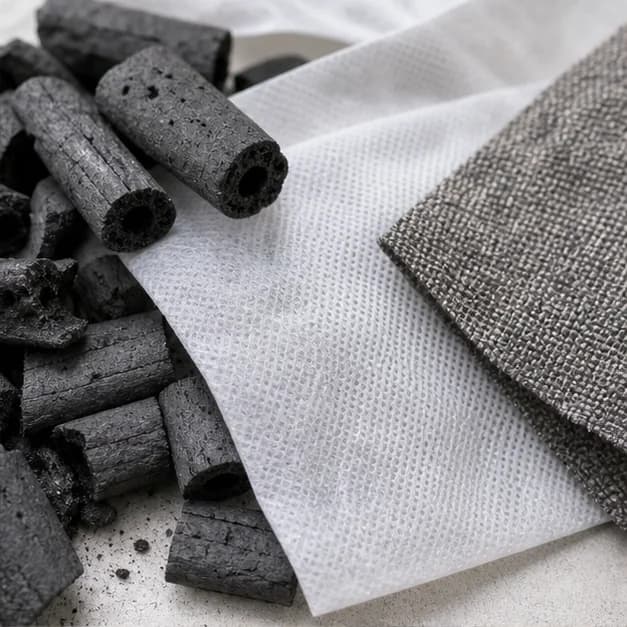
Three parts of the system must work together:
- The charcoal: its feedstock, carbonization conditions, particle size, dust level and surface characteristics.
- The containment: the inner liner, seams and closure must retain charcoal while remaining sufficiently breathable.
- The application: the pouch must be sized and positioned so air can reach it in the space where the odor occurs.
I have seen product discussions focus almost entirely on the charcoal, even though the pouch can decide whether air reaches it. Good charcoal can still disappoint when the construction is too tight, the user leaves it inside a sealed overpack or the pouch sits far from the relevant air volume. At the other extreme, a very breathable pouch creates its own problem if the liner and seams do not control particles well.
Adsorption is not absorption
The two words are often mixed in product listings. Absorption describes a substance entering the volume of another material, as water enters a sponge. Adsorption describes molecules adhering to a surface. Charcoal is normally discussed as an adsorbent.
This distinction matters because surface availability is central to product design. Fill weight alone does not prove performance. Particle structure, accessible pores, airflow and contact time also matter.
Is bamboo charcoal the same material as activated carbon?
No—not automatically.
“Bamboo charcoal” identifies the carbonized feedstock. “Activated carbon” describes carbon that has undergone an additional physical or chemical activation process intended to develop a larger and more controlled pore structure. A supplier should not use the terms interchangeably unless activation is part of the documented material specification.
For buyers, this is an important claim-control checkpoint:
| Question | Why it matters |
|---|---|
| Is the fill bamboo charcoal or activated bamboo carbon? | The names imply different processing histories. |
| What process documentation is available? | It helps the buyer match packaging language to the supplied material. |
| What particle format and dust limit are approved? | These affect handling, containment and consistency. |
| Is performance claimed for odor care or for a named chemical? | Specific removal claims generally need specific supporting evidence. |
Ordinary bamboo charcoal may still be suitable for a passive odor-care pouch. The point is accuracy: sell the material that was specified and use language that the evidence supports.
Where are passive charcoal pouches most appropriate?
Bamboo charcoal pouches are best considered for localized or enclosed use cases where passive placement is convenient and expectations can be clearly explained.
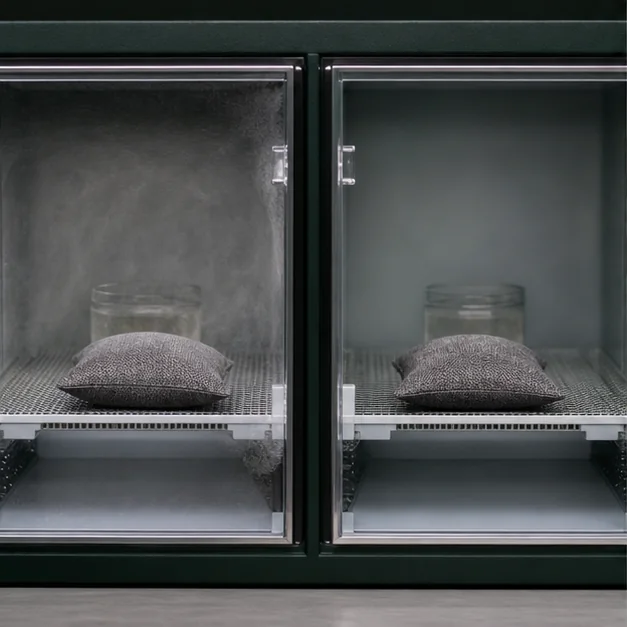
Closets, drawers and storage spaces
These spaces often have limited airflow and hold fabrics, shoes or stored goods close together. A pouch can be placed without power and without adding fragrance. The buyer should define enclosure size, intended placement, pack count and whether hanging hardware is needed. Our home and storage application guidance shows how those variables affect the product brief.
Shoes and sports gear
Slim paired pouches can be placed inside footwear after use. The format must fit without stretching the shoe, and care copy should tell the user to place the pouch only in dry footwear. Persistent odor may indicate that the footwear itself needs washing, drying or replacement.
Vehicle interiors
Cars introduce heat, sunlight, vibration and safety constraints. A buyer should approve the attachment method and confirm that a pouch will not obstruct controls, visibility, seat movement or safety equipment. Cabin odors from spills, smoke or water ingress still require source-specific cleaning.
Dry pet living areas
A larger pouch can be placed near a dry pet bed, crate area or storage zone, but it should be kept away from chewing and direct pet contact. A charcoal pouch is not a replacement for litter maintenance, laundering or veterinary attention when odor signals a health issue.
What these bags should not be presented as
A passive pouch does not move air through a filter and should not be positioned as equivalent to a powered room air cleaner. It also should not be promoted as a remedy for a gas leak, active mold, severe smoke contamination, sewage, persistent moisture intrusion or other conditions that require professional correction.
The US EPA introduction to indoor air quality emphasizes source control and ventilation as important parts of indoor air-quality management. That principle is useful for honest charcoal-bag instructions: manage the source first, then use a passive pouch only within its defined role.
Which specifications influence real-world performance?
1. Charcoal specification
“Black granules” is not an adequate purchase specification. Buyers should record the material identity, feedstock, processing description, particle range, acceptable dust level, appearance and any test documentation required for the destination market.
2. Net fill weight and tolerance
A 200 g label should correspond to a defined finished-product tolerance and an inspection method. NIST guidance on SI units helps buyers state mass and dimensions consistently. More fill may provide more available material, but a heavier pouch is not automatically better if the enclosure is small, the construction blocks airflow or placement is poor.
3. Particle size and dust control
Very fine material may create containment challenges. Larger pieces behave differently in packing and surface exposure. A golden sample should define the approved particle presentation as well as the acceptable level of visible dust.
4. Pouch breathability
Air must reach the charcoal. Outer fabric, printing coverage and inner-liner construction influence contact. BamveraEco uses a reference 65 gsm white SMS nonwoven inner-liner construction for selected pouch programs; the final liner, fabric and seam specification should be agreed through samples.
5. Enclosure and airflow
A shoe, drawer and vehicle cabin are different environments. The same pouch cannot be assumed to perform identically across them. Air exchange, temperature, humidity and the distance between the pouch and odor source change the exposure.
6. Odor source and intensity
Fresh footwear moisture, cooking residue, tobacco smoke and an undiscovered leak are not interchangeable odor problems. A passive product is more credible when the packaging defines its intended use and does not imply that every source can be handled in the same way.
7. Time and customer behavior
Passive adsorption is not instant. Users also need directions on unpacking, placement, keeping the product dry and checking the odor source. If a brand recommends periodic sunlight exposure, it should explain that this primarily helps keep the pouch dry; it should not promise complete restoration of adsorption capacity without supporting tests.
How should wholesale buyers test a physical sample?
A practical development trial does not need exaggerated demonstrations. It needs repeatable conditions and clear acceptance criteria.
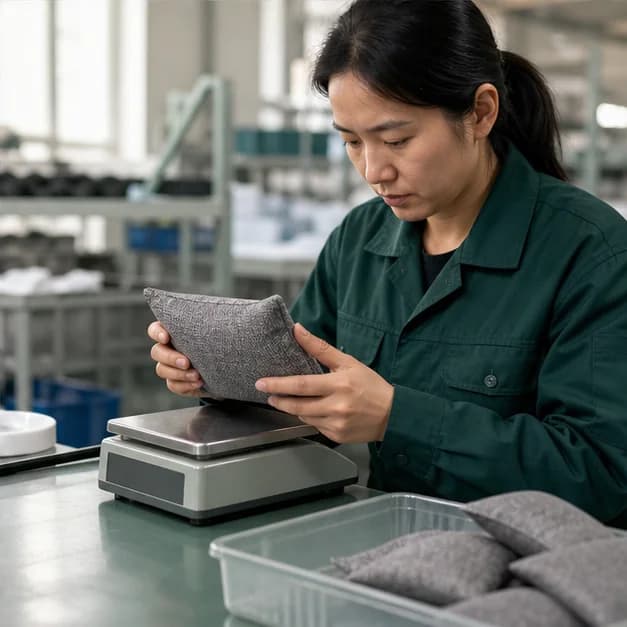
Step 1: Define the use case
Record the target market, space, likely odor source, desired pack count, placement, customer promise and retail price position. “For home use” is too broad. “Two 200 g hanging pouches for a dry wardrobe” is reviewable.
Step 2: Freeze the sample variables
I treat this as the point where a promising sample becomes a repeatable product. Document dimensions, net fill, charcoal type, particle format, inner liner, outer fabric, seams, eyelet or cord, printing and packaging. Photograph the approved sample and keep a signed or coded physical reference.
Step 3: Compare like with like
Use two comparable enclosures. Keep volume, starting condition, temperature, humidity, placement and trial time as similar as possible. Include a control without the pouch. Avoid changing cleaning routines during the comparison.
Step 4: Inspect both product and experience
Record more than perceived odor. Check fill weight, thickness, seam integrity, visible dust, deformation, print quality, hanging security and ease of handling. If multiple evaluators are involved, use the same scoring scale and do not tell them which sample is expected to win.
Step 5: Write a defensible conclusion
The outcome may support a narrow statement such as “designed for passive odor care in closets.” It does not automatically support “removes all odors,” “purifies an entire room” or removal percentages for a named chemical.
Mid-article CTA — Request a sample comparison plan
Tell us the target space, pouch format, fill weight and pack count. BamveraEco can prepare a reviewable sample specification for your own application trial.
What should buyers approve before bulk production?
Use the approved sample as a product system, not merely a color reference.
- Material name and processing description
- Charcoal particle presentation and dust acceptance
- Pouch dimensions and finished net-fill tolerance
- Inner-liner material and construction
- Outer fabric, color and print method
- Seam pattern, closure and hanging components
- Unit pack, instructions, warnings and pack count
- Barcode area, inner packs and export-carton data
- In-process checks and finished-goods sampling plan
- Retained golden sample for repeat orders
For selected standard configurations, BamveraEco publishes a reference MOQ from 2,000 bags per style. The final MOQ, lead time and inspection plan depend on the approved material, artwork, packaging and order specification.
How can brands write accurate packaging claims?
Trustworthy copy is specific about product format and avoids promising an outcome that depends on conditions outside the product.
Prefer language such as:
- “Fragrance-free passive odor-care pouch”
- “Contains carbonized bamboo charcoal”
- “Designed for placement in dry, enclosed storage spaces”
- “Performance varies with placement, airflow, odor source and conditions”
Avoid unqualified language such as:
- “Eliminates every odor”
- “Purifies the whole home”
- “Removes 99% of formaldehyde” without a relevant, reproducible finished-product test
- “Non-toxic” or “pet safe” without defining and substantiating the claim
The FTC Green Guides are a useful reminder that environmental benefit claims should be clear, qualified where necessary and supported by evidence. Destination markets may have additional labeling and product-safety requirements, so buyers should obtain appropriate local review.
What do buyers frequently ask about charcoal pouches?
Do bamboo charcoal bags remove odors permanently?
They may support passive odor adsorption, but they do not permanently solve every odor source. Cleaning, drying, ventilation or repair may still be required. Performance also changes as available adsorption sites become occupied.
How quickly should a bag work?
There is no universal time. Pouch construction, fill, air contact, enclosure volume, odor intensity, humidity and placement all influence the experience. Buyers should test the finished specification in a representative environment rather than publish an arbitrary number.
Can a bamboo charcoal bag remove moisture?
Charcoal may interact with humidity, but a passive charcoal pouch should not be sold as a replacement for a dehumidifier or moisture-remediation plan. Persistent dampness needs source control and ventilation.
Does putting the bag in sunlight recharge it?
Sunlight exposure can help keep a pouch dry, but “fully recharges” is a stronger performance claim that requires evidence. Care instructions should be based on the actual fabric, print, liner and charcoal specification.
Is more charcoal always better?
No. Fill weight is one variable. Fit, breathability, particle format, airflow and application determine whether the added weight is useful. A bulky pouch can be unsuitable for shoes even if it contains more material.
Can one design be used for closets, shoes and cars?
The same material family can support several products, but the finished formats should be application-specific. Shoes need slim paired bags; closets may need hanging pouches; vehicles require heat-aware materials and safe placement.
What proof should a private-label buyer request?
Request a complete specification, material documentation relevant to the claim and destination market, a coded approval sample, fill-tolerance records, construction details, packaging artwork and an agreed inspection plan. Ask for a named test method before relying on a performance percentage.
Conclusion: What is the most reliable way to evaluate a program?
Bamboo charcoal bags can be a useful fragrance-free, passive odor-care format for defined enclosed spaces. Their credibility depends on accurate material naming, a breathable but dust-controlling construction, an application-appropriate fill and realistic customer instructions.
My practical recommendation is straightforward: define the use case, approve the whole product through a physical sample and test it under representative conditions. Buyers developing a home-care range can then review our private-label air-purifying bag options. This process gives the buyer clearer packaging copy, fewer disputes and a specification the factory can follow again on bulk and repeat orders.
Final CTA — Develop a sample around your target application
Send the intended space, dimensions, fill weight, fabric, logo method, pack count and target quantity. We will review the brief and recommend a practical sampling path.