Drawers
Compact pouches for garment, linen or accessory drawers where thickness and easy placement matter.

Factory-direct 100g and 200g odor absorber bags for storage containers, developed for home-organization brands, importers and private-label programs. Match the pouch to the container, then customize fabric, logo, pack count and retail packaging.
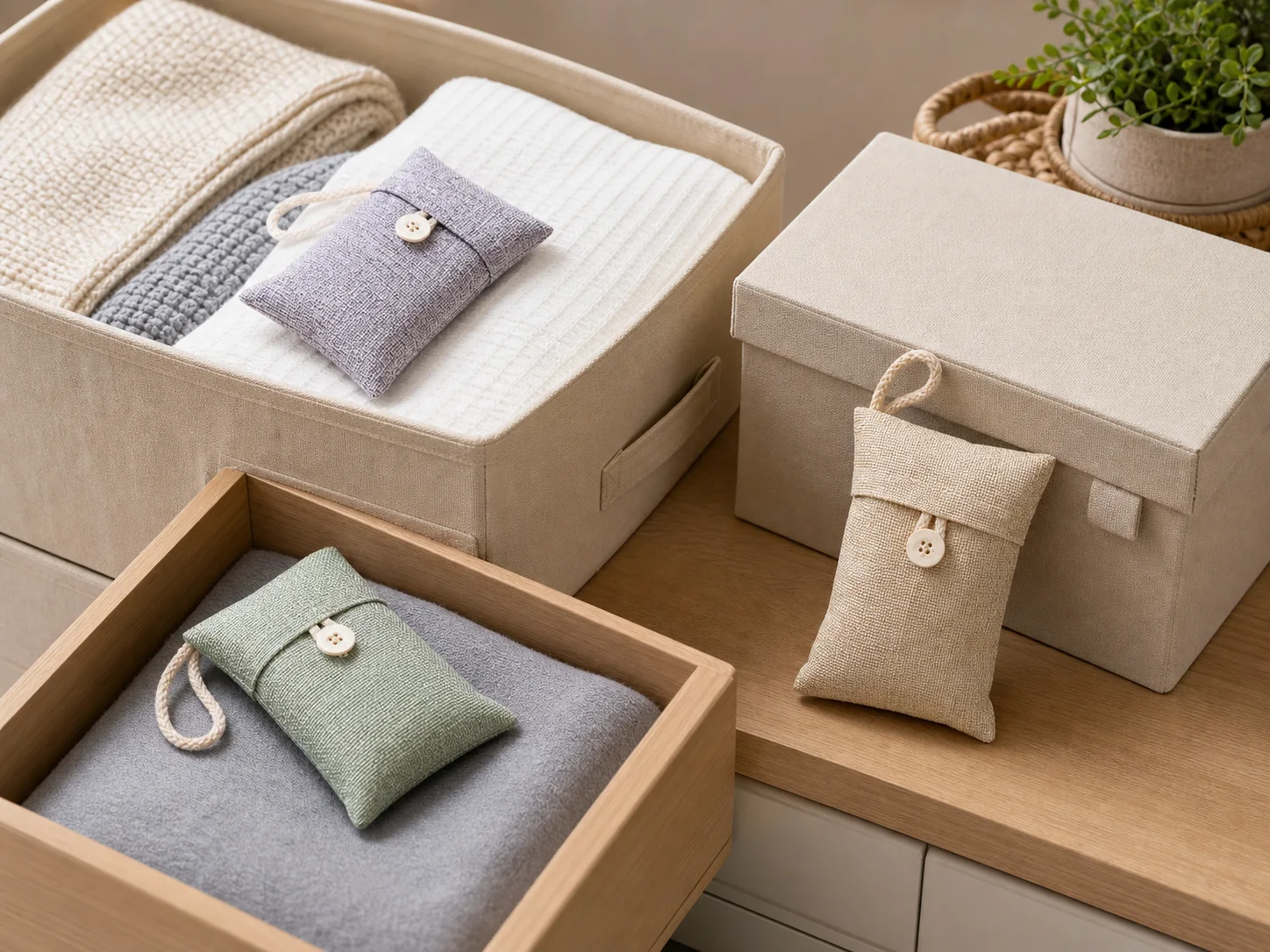
The best format follows the enclosure—not a generic ‘one bag per room’ rule. Buyers should define container volume, compartment layout, loading density and expected placement before confirming a fill weight.
For larger home-care formats and coordinated product programs, review our private-label bamboo charcoal air purifying bags.
Compact pouches for garment, linen or accessory drawers where thickness and easy placement matter.
Choose by internal volume, how tightly the bin is packed and whether one pouch can remain exposed to air.
Shelf or hanging formats for enclosed furniture, utility cupboards and home-organization assortments.
Set placement and care copy for luggage, seasonal textiles and storage boxes that may stay closed for long periods.
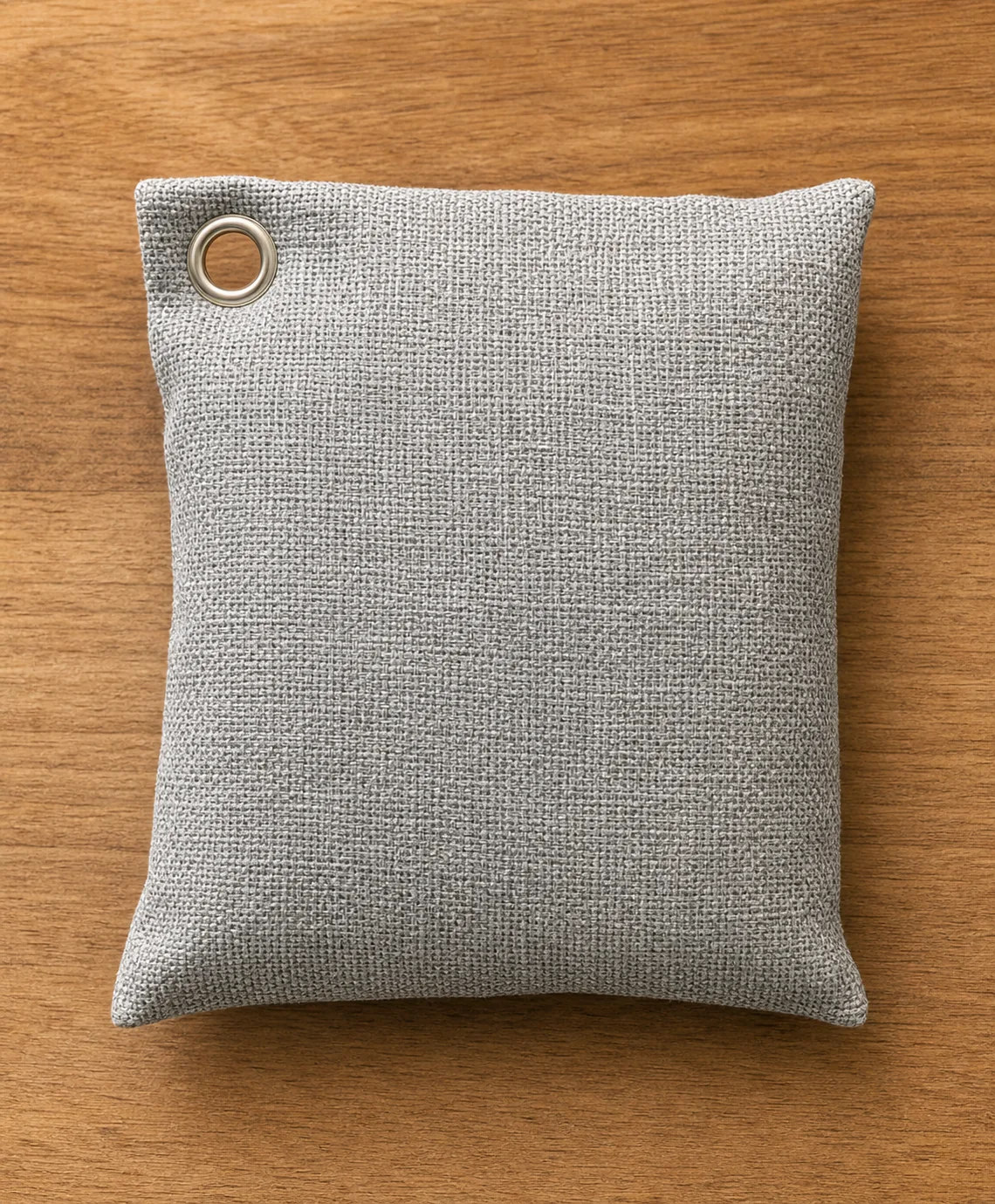
Use 100g and 200g as reference starting points, not fixed performance guarantees. Validate the chosen pouch in a representative container with the same loading conditions expected by the end user.
| Use context | Reference start | Approval focus |
|---|---|---|
| Small drawer | 100g | Thickness, exposed placement, compact pack |
| Storage bin | 100g / 200g | Internal volume, fill density, compartment count |
| Cabinet | 200g | Shelf or hanging position, clearance, care copy |
| Luggage / seasonal box | Sample-led | Closure period, dryness, handling and replacement guidance |
Porous bamboo charcoal can support adsorption of certain odor-causing compounds when air reaches the charcoal through a breathable pouch. Results vary with charcoal grade, net fill, airflow, humidity, temperature and the stored materials.
For damp containers, first solve leaks, condensation or inadequate drying. A bamboo charcoal pouch should not be sold as a replacement for a purpose-tested desiccant or professional mold remediation.
Read the evidence-based buyer guideFragrance-free support for dry storage environments.
Moisture-control claims require a different test method and product basis.
Keep breathable surfaces exposed and the pouch dry.
Approve each variable as part of one system so future orders follow the same reference.
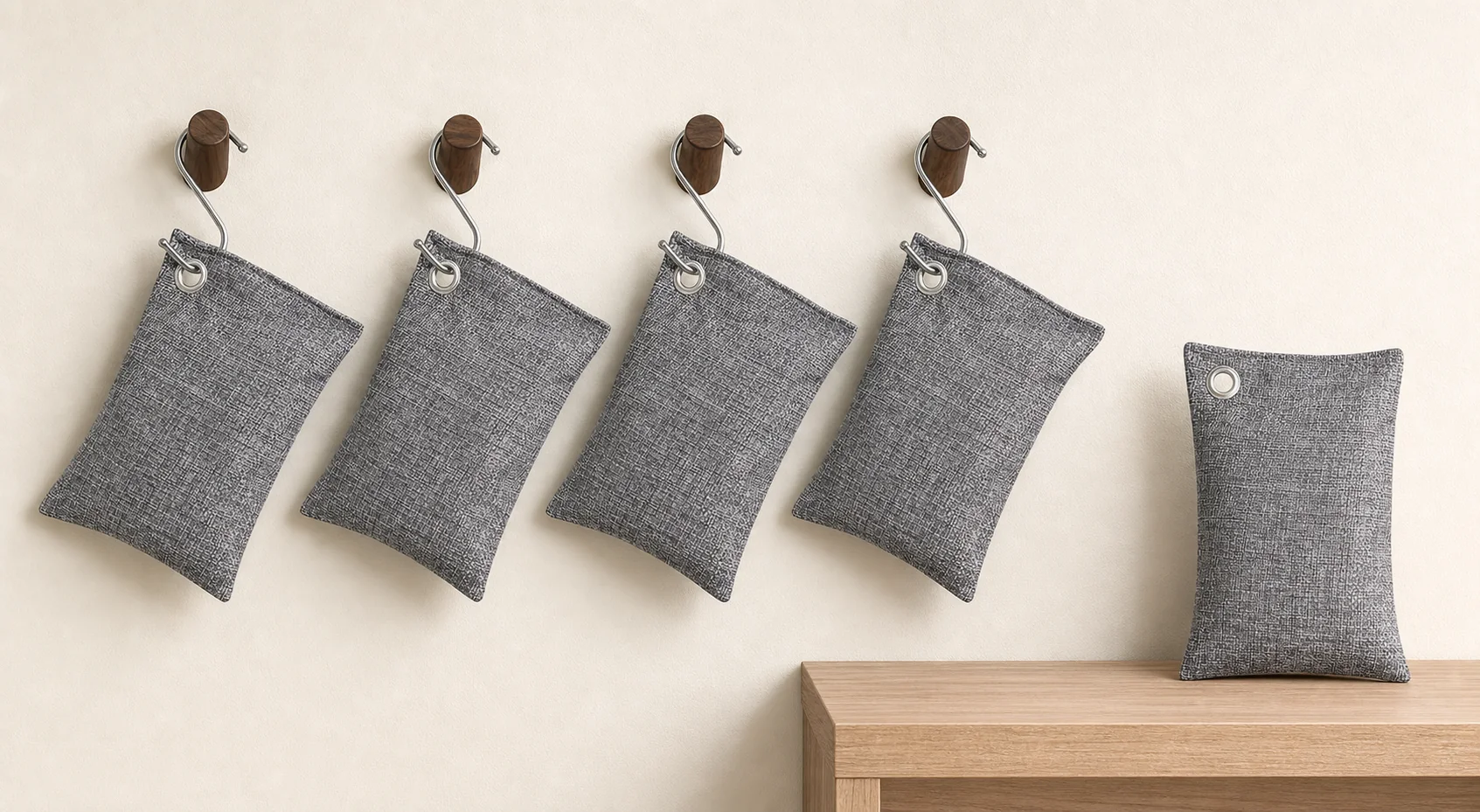
Record target bin, box, cabinet or drawer, market, price point and pack count.
Set dimensions, net fill, SMS liner, outer fabric and hanging method.
Approve logo technique, care copy, individual or multipack packaging and barcode area.
Lock tolerances, artwork position and packing sequence before bulk production.
Yes. A compact 100g format can be developed for dry drawers when the pouch remains exposed rather than buried under tightly packed contents. The final instructions should reflect the drawer size and actual placement.
A 100g pouch can be a starting point for compact bins, while 200g may suit larger boxes or cabinets. There is no universal bin-to-weight formula; internal volume, loading density, airflow and odor source should guide sampling.
They can be positioned in dry containers for odor-care support. The pouch should not contact wet contents, and it does not replace leak repair, ventilation, mold remediation or a purpose-tested desiccant.
Place it near the top or side where its breathable surfaces are not compressed. For divided containers, consider one pouch per isolated compartment.
Yes. Buyers can specify dimensions, net fill, fabric, color, hanging details, logo method, pack count and packaging after sample review.
Check finished size, thickness, net fill tolerance, liner, seams, hanging point, artwork, pack count, care copy and carton data against the intended storage use.
Share the container type, approximate dimensions, target fill weight, quantity, brand method and packaging route. We will recommend a sample starting point.