
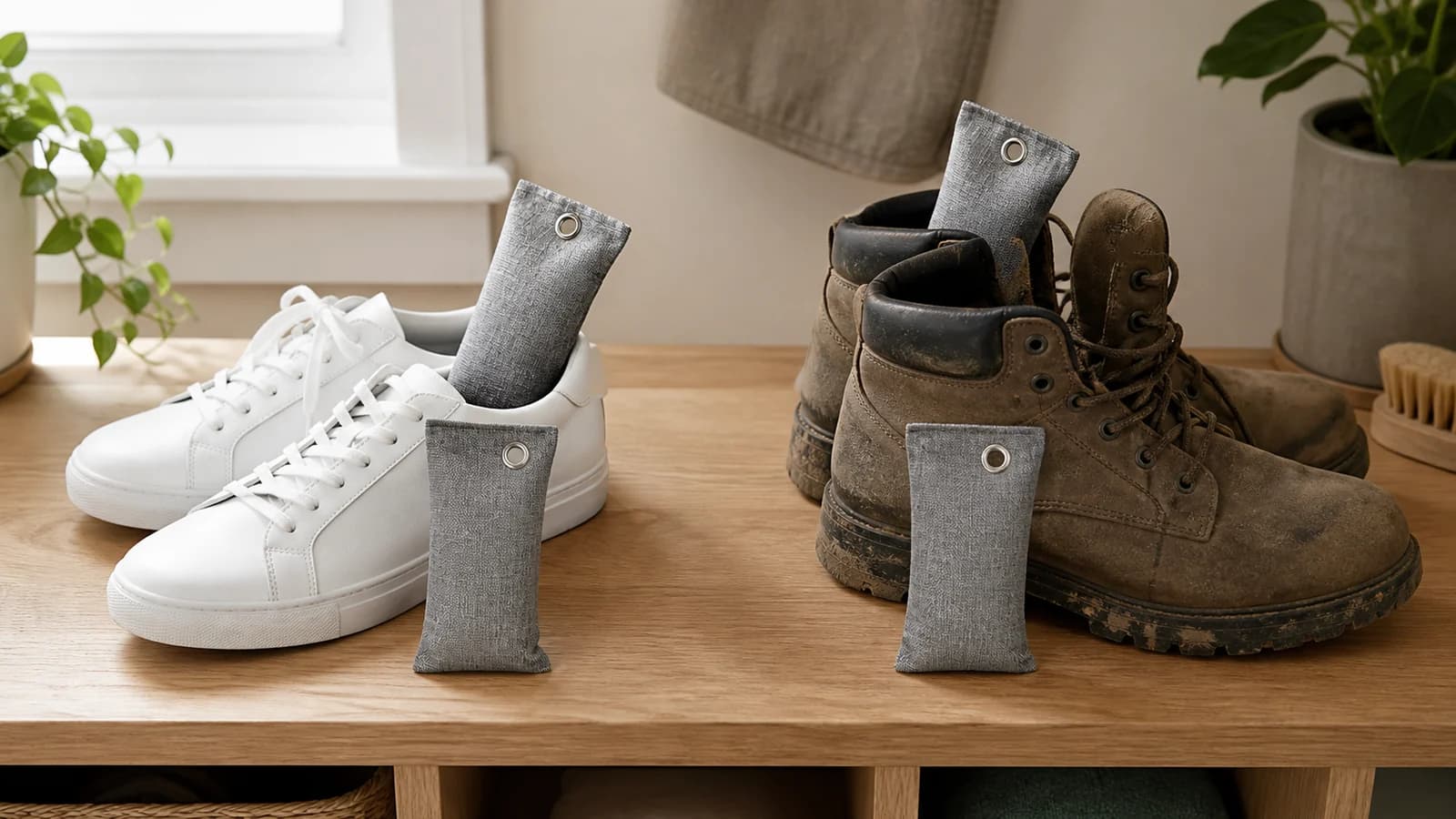
Two identical charcoal pouches can earn opposite reviews. Put one in a clean, dry sneaker during storage and it has a manageable job. Push the other into a damp work boot that is worn every day, and the odor source keeps running while the pouch is being judged.
Charcoal shoe deodorizers can help manage some airborne odor compounds in clean, dry footwear during storage. They cannot wash a lining, dry a wet shoe, stop new perspiration, disinfect footwear or treat a foot condition. Their result depends on the odor load, air contact, finished construction and use routine.
A fair test follows the air path from the shoe to the finished pouch. That path gives consumers a better way to use the product and gives footwear-care teams a practical basis for testing samples, writing instructions and keeping performance claims inside the evidence.
Do charcoal shoe deodorizers actually work?
Yes, within a defined role: a charcoal pouch may support gradual control of some residual airborne odors when it sits in clean, dry footwear between wears. It is a storage-care accessory, not a cleaner, dryer, disinfectant or treatment for the feet.
That distinction explains much of the disagreement in product reviews. A user may insert a pouch immediately after exercise while the sock liner is still wet, then expect the shoe to smell neutral by morning. Another user may rotate two pairs, let each one dry and use the pouch only during storage. They are testing different odor loads, not simply different opinions of charcoal.
The smell inside a shoe also comes from more than one compound. Research into microbial foot-odor metabolism has connected isovaleric acid with the bacterial breakdown of components in sweat. Other acids and volatile compounds can contribute as well. One porous material will not interact with every compound in exactly the same way.
A pouch has a credible maintenance role after the active source has been reduced. If moisture, dirt, a spill or repeated wear keeps producing odor, source control comes first.
| Charcoal may support | Suitable condition | Charcoal does not replace |
|---|---|---|
| Mild residual odor care | The shoe is clean and dry | Cleaning sweat, dirt or spills |
| Fragrance-free storage | Air can reach the pouch | Drying wet lining or foam |
| Between-wear maintenance | The pair has time to rest | Footwear rotation and sock changes |
| Gradual exposure to airborne compounds | The pouch fits without being crushed | Disinfection or medical care |
What does adsorption mean inside a shoe?
Adsorption means that molecules adhere to available surfaces. It does not mean the pouch draws every odor source out of a shoe like a sponge, and it does not prove that every odor molecule will remain on every type of charcoal under every condition.
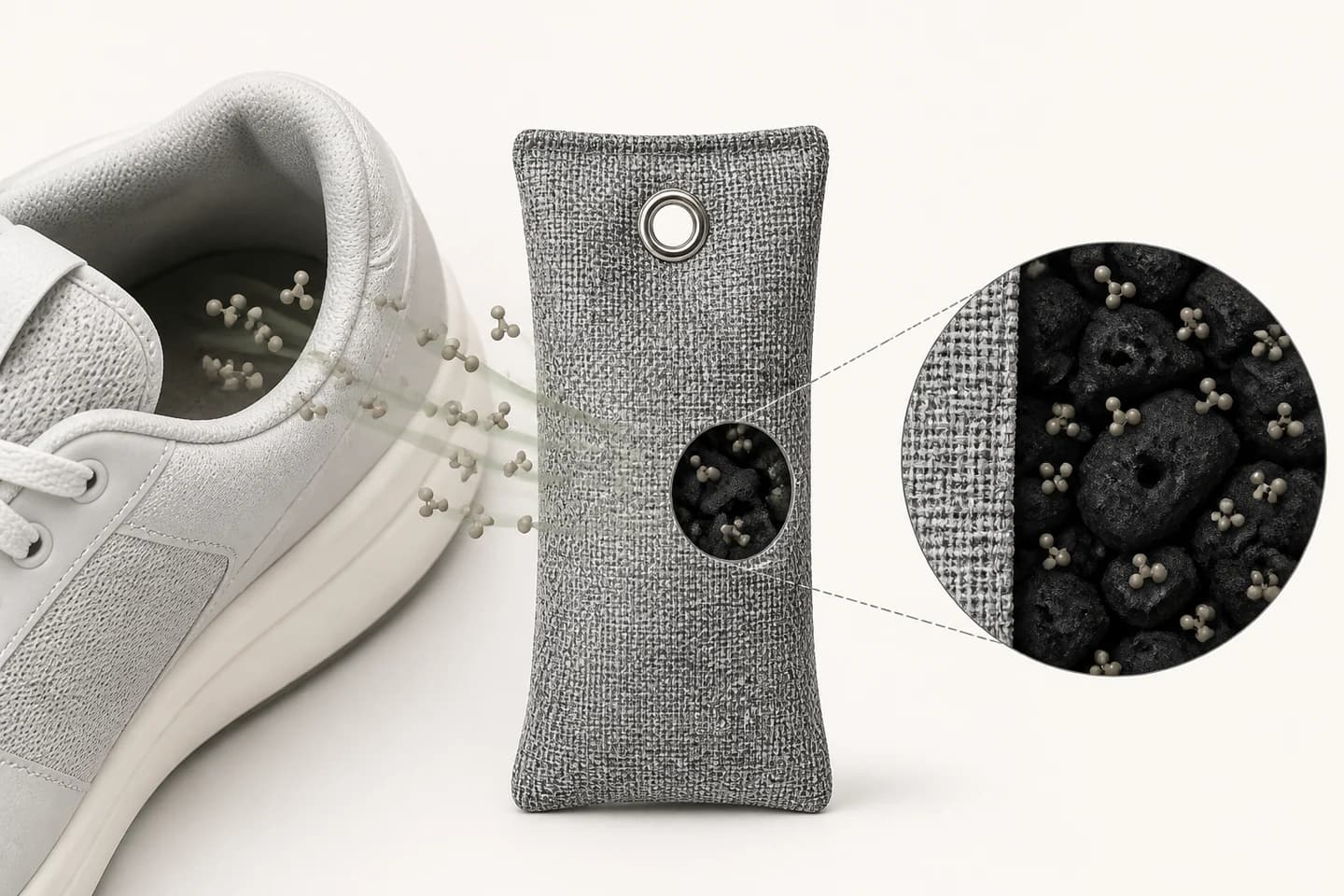
For adsorption to take place, an odor compound must leave its source, enter the air inside the shoe, reach the breathable pouch and contact a suitable charcoal surface. Each step can limit the next one. Residue trapped deep in a foam insole, for example, may continue to release compounds even while some molecules in the surrounding air reach the pouch.
Activated carbon research helps explain the mechanism but also shows why broad claims are risky. In one body-odor adsorption study, activated carbon behaved differently across several odor-related compounds. Pore structure, apparent density and surface characteristics affected the result. The experiment did not test a BamveraEco bamboo-charcoal shoe pouch, so it supports the material principle rather than a finished-product promise.
The distinction between bamboo charcoal and activated carbon also matters. Carbonization and activation are not interchangeable specifications. A seller should identify the material actually used instead of borrowing performance language from an activated-carbon paper and applying it to an untested bamboo-charcoal bag.
The outer construction is part of the air path. Fabric, inner containment, seam layout, particle format and packing density all sit between the shoe air and the carbon surface. A material can show adsorption in a laboratory vessel while a finished pouch performs poorly because its air path is restricted.
Which shoe-odor situations are realistic targets?
The best target is mild residual odor in footwear that has already been cleaned as appropriate, dried throughout and given time between wears. A pouch can then support the storage period without being asked to control an active moisture or contamination source.
Recently worn shoes are not automatically unsuitable. They do need to be opened, aired and checked first. Padded collars and removable insoles can remain damp after the upper feels dry. If the shoe needs cleaning or drying, follow its maker's care instructions before adding a passive product.
For a source-first sequence, use the separate guide on getting smell out of shoes. That article covers cleaning, drying and material care in detail. The decision here begins after those steps: is the remaining job small enough and dry enough for passive adsorption support?
Odor accompanied by itching, broken skin, redness, soreness or nail changes belongs outside the product's role. The CDC foot-hygiene guidance advises keeping feet clean and dry, changing shoes and socks regularly, and paying attention to skin and nail problems. A charcoal bag cannot diagnose or treat their cause.
Storage surroundings deserve a check too. If an entire shoe cabinet or gym bag smells, treating one pair may not change what the user notices. Clean the shared space and separate wet sports gear before concluding that a pouch has failed.
Why can a charcoal shoe deodorizer appear not to work?
A pouch often appears ineffective because the odor source is still active, the shoe remains damp, air cannot reach the bag, the format does not fit or the user is judging fragrance rather than odor reduction. Diagnose the condition before changing the fill weight or adding more pouches.
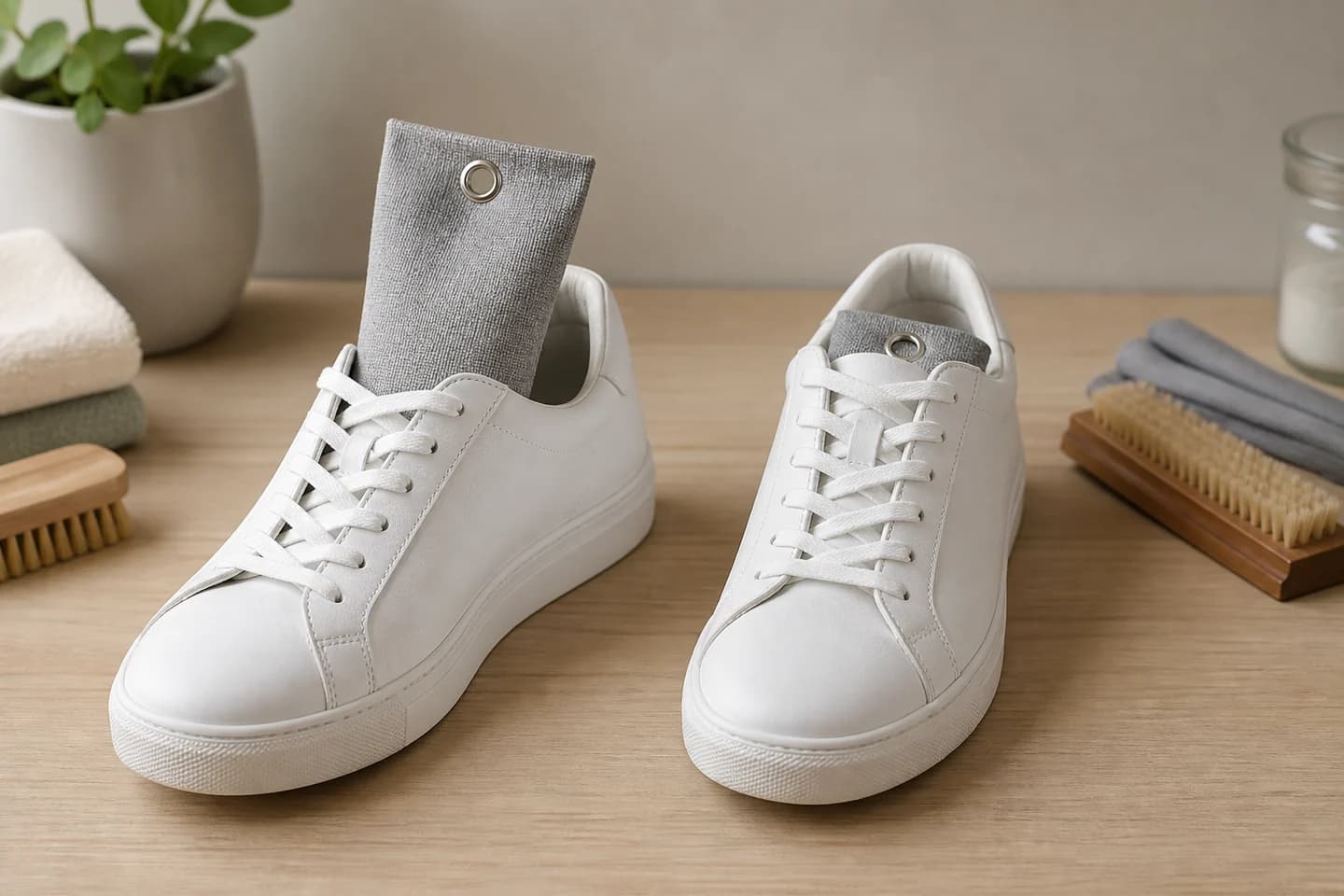
Start with moisture. Footwear creates a small, enclosed microclimate, and shoe construction affects heat, humidity and ventilation. A footwear microclimate study found different internal conditions across casual, running and perforated shoes, with ventilation showing a relationship to bacterial growth on plantar skin. That study is not a pouch trial, but it explains why the same storage routine can feel different across footwear types.
Next, inspect placement. A bag folded under a tight tongue exposes less of its outer surface than one resting loosely inside an open shoe. Forcing an oversized pouch into the toe box can also make removal awkward, which encourages users to push it deeper or stop using it.
Finally, define what "working" means before the check begins. A fragrance-free pouch does not release a fresh scent. If the user expects perfume, the absence of a new smell may be mistaken for no change at all. Compare the original unwanted odor under similar conditions instead.
| What you observe | Likely reason | Check next | Do not conclude yet |
|---|---|---|---|
| Odor returns after every wear | Sweat and moisture keep renewing the source | Drying time, socks and footwear rotation | That the charcoal material is inactive |
| Shoe still feels cool or damp | The lining or insole has not dried | Remove permitted components and continue drying | That a passive pouch is a dehumidifier |
| Pouch is folded beneath the tongue | Air exposure and fit are restricted | Try an approved slimmer format or clearer placement | That more fill is automatically better |
| No "fresh" scent appears | The product is fragrance free | Compare unwanted odor, not added perfume | That no scent means no adsorption |
| One shoe is much worse | A local spill, insole issue or foot-related source may differ | Compare the pair and corresponding feet | That both shoes need identical treatment |
| Cabinet odor remains around the pair | The surrounding storage space is contributing | Clean and ventilate the cabinet or bag | That shoe-only treatment can fix the room |
Does more charcoal automatically mean better performance?
No. Net fill is an important specification, but performance does not rise automatically with every added gram. Material properties, accessible surface, particle format, fabric permeability, pouch thickness, placement and the volume of the shoe all affect what the finished unit can do.
A heavy pouch may be useful in a roomy work boot yet awkward in a low-profile trainer. If the bag must be folded, its extra material may provide less practical exposure than a slimmer format that sits freely. A dense fill can also change the way the pouch flexes and how air moves around or through its construction.
This is why fill weight should be reviewed with finished dimensions and target footwear. The size and fill-weight guide explains how density, tolerance, usable volume and construction influence a charcoal bag specification. The number on a quotation is only one part of that comparison.
Importers should also avoid treating charcoal pouches and charcoal insoles as synonyms. An insole is worn under the foot and must meet a different fit, compression and material brief. The BamveraEco format discussed here is a removable storage pouch. It comes out before the shoe is worn.
How should buyers test a finished shoe deodorizer?
Test the completed pouch in representative footwear against a defined comparison, not by smelling loose charcoal or reading a raw-material sheet. The trial should control the shoe condition, placement, exposure time and storage environment closely enough that the result can be interpreted.
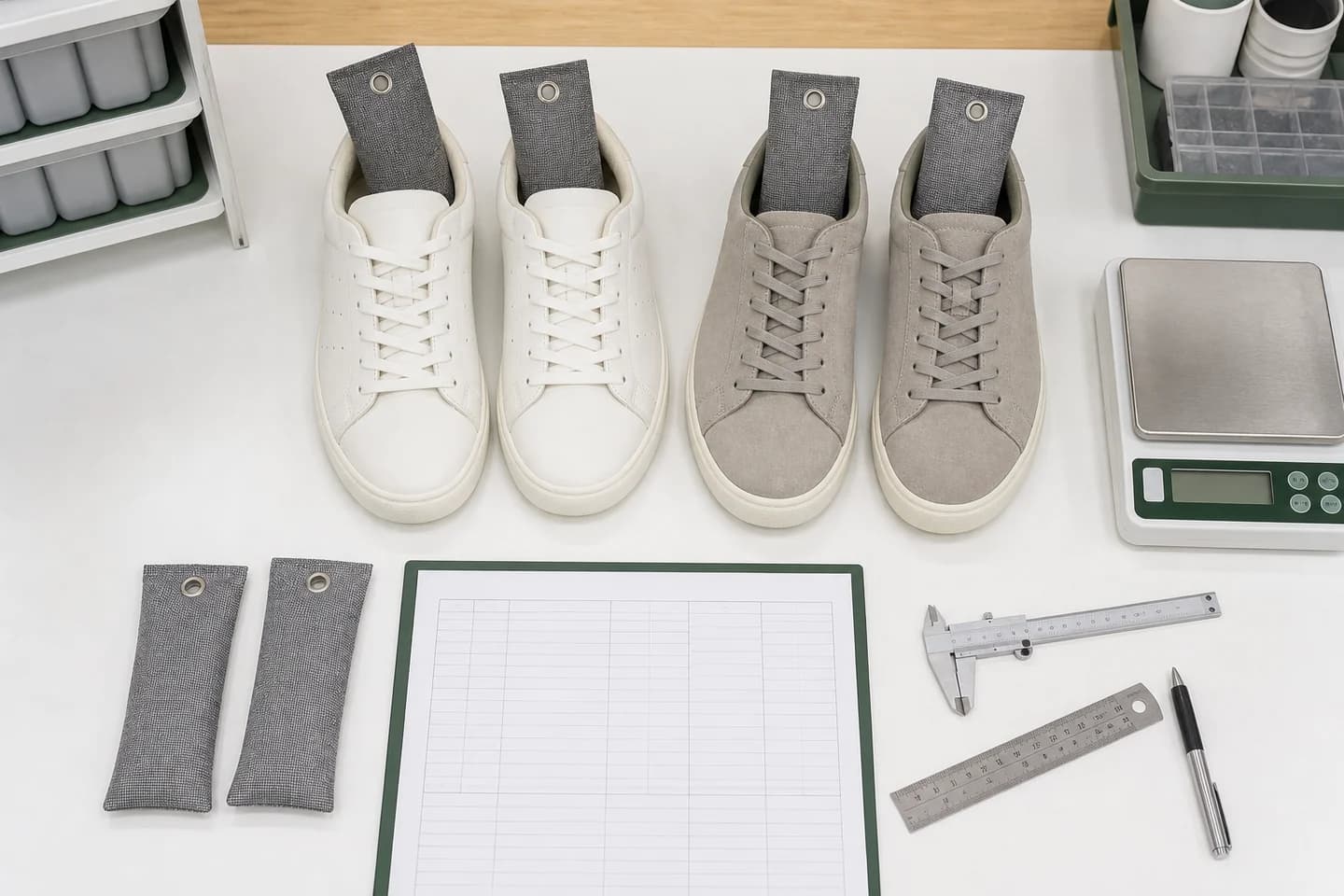
Begin with construction and fit. Record dimensions, net fill, finished thickness, seam condition and any visible dust. Insert the pouch into the actual sneaker, boot or other footwear format planned for the range. Check whether it sits freely, whether the upper is distorted and whether a customer can remove it without pulling on a seam.
In sample reviews, I treat pouch fit and air exposure as part of the performance specification. A bag that looks substantial on a workbench may be folded, blocked or difficult to remove once it enters a low-profile shoe. That is a product-design problem, even when its net fill matches the purchase order.
The use comparison comes next. Choose clean, dry footwear and record the starting condition. Keep the sample and comparison shoes in equivalent storage, with the same observation period and similar temperature and humidity. Repeat the routine across more than one cycle. One unblinded smell check can be influenced by expectation, order and simple sensory fatigue.
If a product team wants a numerical reduction, fixed working time or stated service life, a casual trial is not enough. Define the target compound or sensory method, controls, sample count, environmental conditions and acceptance criteria with a qualified laboratory or test partner before printing the claim.
| Test gate | Control before testing | Evidence to record | Rejection signal |
|---|---|---|---|
| Fit | Target shoe type and size | Insertion, clearance and removal photos | Pouch distorts the shoe or must be folded |
| Construction | Approved fabric, liner, seam and fill | Dimensions, net fill and dust check | Leakage, open seam or inconsistent finish |
| Exposure | Clean, dry footwear and fixed placement | Position, time, temperature and humidity | Wet shoe or blocked pouch surface |
| Comparison | Equivalent shoe condition and storage | Predefined observations over repeated cycles | Conditions change between sample and control |
| Claim | Exact proposed packaging language | Evidence matched to each objective statement | Wording promises more than the trial measured |
The footwear and sports-gear application guide can help define shoe clearance, pair count and storage handling before samples are ordered.
Preparing a footwear-care trial?
How long should a charcoal shoe deodorizer take to work?
There is no responsible universal working time. Starting odor load, shoe volume, charcoal specification, pouch construction, humidity, air exposure and the evaluation method can all change when a user notices a difference.
"Overnight" can be a useful observation point in a trial, but it should not become a guarantee unless the finished product has been tested under defined conditions. A mild residual odor in an aired sneaker and a strong odor in a thick work boot are not comparable challenges, even when both pouches remain in place for eight hours.
The same caution applies to service life. Charcoal surfaces have finite available sites, and real footwear exposes them to mixtures of odor compounds and moisture. A calendar claim such as "lasts two years" needs evidence for the actual material, pouch and care routine. Packaging should not copy a lifespan from another supplier or a different carbon format.
Users can make their own observation more useful by holding a few variables steady. Start after cleaning and complete drying, use the same placement, note the date and compare at similar intervals. Stop the trial if the pouch becomes wet, damaged or leaks.
Can sun drying fully restore a charcoal shoe deodorizer?
Sun drying may help remove incidental moisture when the approved care instructions allow it, but drying is not proof that every occupied adsorption site has returned to its original state. "Reusable" and "fully regenerated" are different claims.
Desorption depends on the material, the compounds held, temperature, humidity and time. Some molecules may release more readily than others. Outdoor sunlight also exposes the fabric, sewing thread, printed marks and labels to heat and ultraviolet light, so the complete pouch needs a suitable care instruction rather than a rule copied from raw charcoal.
If repeated use is part of the retail position, test more than the first cycle. Record appearance, seam integrity, dust control, fit and observed odor performance after the proposed care routine. Do not publish a temperature, sunlight duration or cycle count that the finished construction has not been reviewed against.
The safe instruction may be modest: keep the pouch dry, follow the approved refresh method and replace it if the fabric or seam is damaged. That is more useful than promising that sunlight makes the product "as new."
Which marketing claims can the evidence support?
The strongest claim is the narrowest accurate one. A finished-sample review may support language such as "helps adsorb unwanted odors in clean, dry footwear during storage," while fixed percentages, time periods, antimicrobial effects and medical benefits need more specific evidence.
Start with the intended use. "Place one pouch in each clean, dry shoe between wears" tells the customer when the product has a reasonable job. "Remove before wearing" prevents the storage pouch from being mistaken for an insole. "Does not replace cleaning or drying" keeps the limitation visible rather than hiding it in fine print.
Claims such as "works overnight," "lasts 24 months" or "reduces odor by 90%" are objective and measurable. The FTC substantiation policy says advertisers should have a reasonable basis for express and implied objective claims before they are disseminated. A supplier statement, customer review or unrelated activated-carbon study is not automatically that basis.
Health and hygiene wording needs even greater restraint. Do not claim that a storage pouch kills bacteria, prevents athlete's foot, sanitizes a shoe or treats excessive sweating without evidence appropriate to that exact claim and market. The product can support odor care without being presented as a medical or antimicrobial product.
Review the instruction panel, product name, icons, photos and nearby copy together. A cautious sentence can still be undermined by a badge that implies permanent odor elimination. The private-label customization process is the right stage to align the finished sample, care wording and artwork before bulk packaging is approved.
Conclusion: what counts as a credible yes?
A credible "yes" needs three conditions: the shoe is clean and dry, the finished pouch fits with enough air exposure, and the claim describes only what the actual sample evidence supports. If one condition fails, the trial may be measuring the wrong job.
First check the shoe. Active moisture, dirt and recurring foot-related sources continue producing odor faster than passive storage care can reasonably manage. Then check the product. Material, fill, fabric, seam, thickness and placement work as a system, so a raw-charcoal specification cannot stand in for the finished pouch.
Finally, check the promise. Charcoal shoe deodorizer bags have a practical role in fragrance-free between-wear care, but they do not clean, dry, disinfect or treat footwear. Clear limits make the product easier to use and make a private-label claim easier to defend.
Buyers can review available pouch formats, construction and packaging routes on the charcoal shoe deodorizer product page, then evaluate the selected sample inside the footwear planned for sale.
Ready to review a finished pouch?