Standard wardrobe pouch
A practical starting point for single-compartment wardrobes, open shelves and general closet-care multipacks.
- Reference image: 17 × 14.5 cm
- Eyelet or approved hanging accessory
- Single or coordinated multi-pouch pack

Air Purifying Bags/Closet Programs
Factory-direct · Closet-care OEM / ODMDevelop 200g and 250g odor absorber pouches for wardrobe rails, shelves and organized storage programs. Customize net fill, fabric color, hanging method, logo and retail packaging around your market.
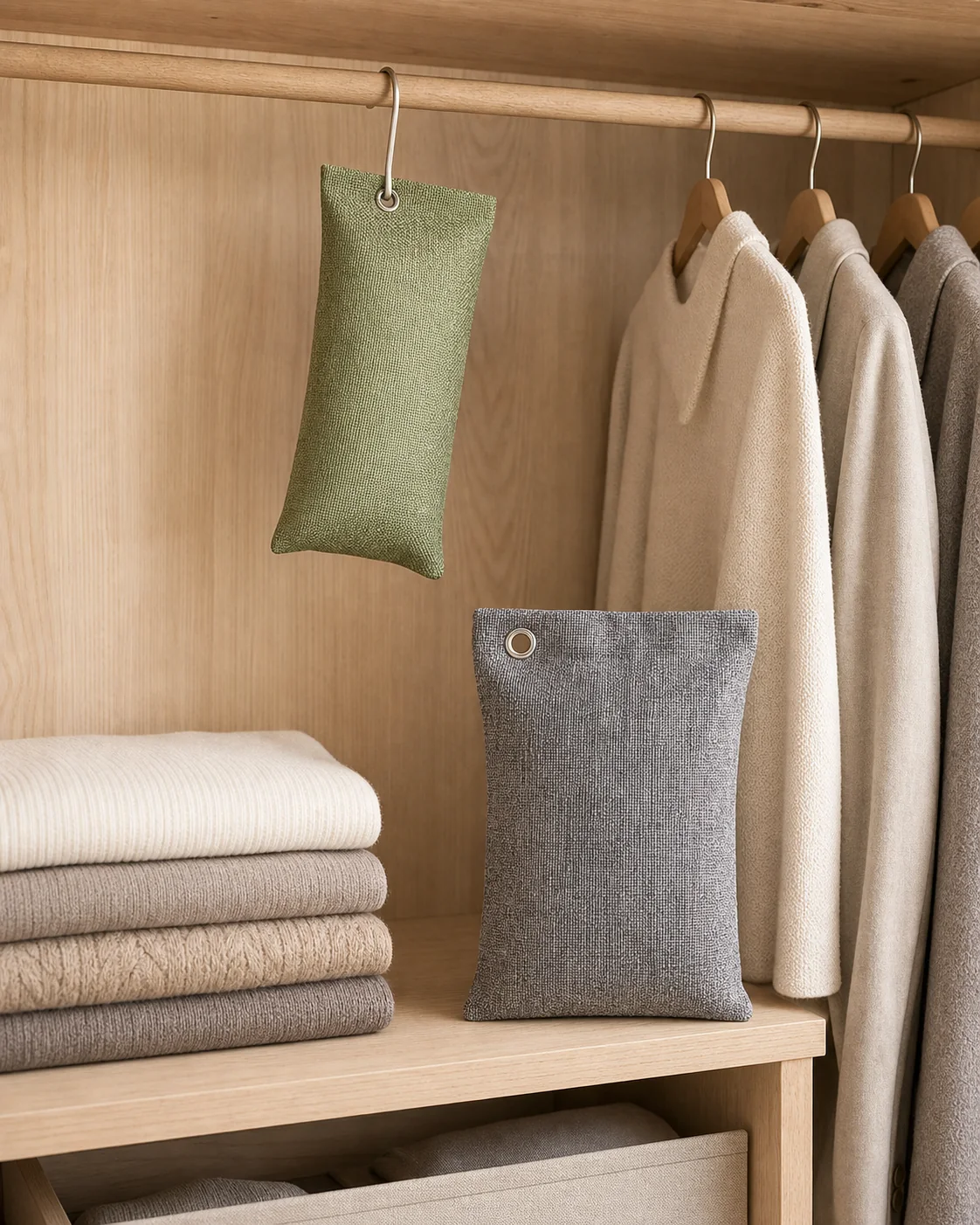
Closet charcoal bags provide a fragrance-free format for supporting odor adsorption in enclosed garment storage. Their usefulness depends on the charcoal specification, net fill, pouch breathability, wardrobe volume, airflow and placement.
For private-label buyers, the important decision is not simply “large or small.” The pouch must fit the wardrobe without being hidden behind clothing, carry enough charcoal for the intended program, and include instructions that do not overstate moisture or pollutant performance.
For additional pouch sizes and home-care formats, explore our wholesale bamboo charcoal air purifying bags.
A recurring musty odor should be traced before any pouch is added. Follow the source-first closet odor guide to separate moisture, textile and placement problems.
Use the wardrobe structure and retail promise to choose the starting format, then confirm the final dimensions and tolerance on a physical sample.
A practical starting point for single-compartment wardrobes, open shelves and general closet-care multipacks.
Useful when the buyer needs a differentiated fill amount, larger visual presence or a specific price and packaging position.
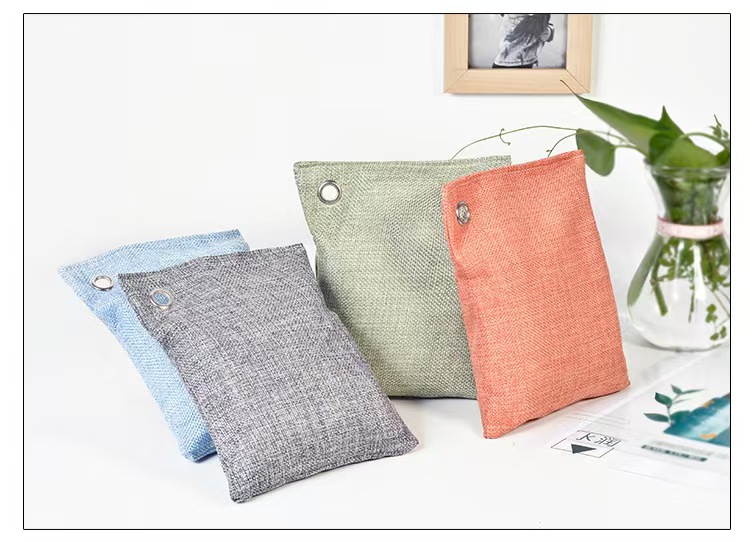
One pouch may suit a compact, open compartment. Divided wardrobes should be planned by airflow zone rather than treated as one empty box.
Use the eyelet or approved hanger so air can move around the pouch without pressing it between garments.
Place a second pouch on an open shelf in taller wardrobes or separated garment sections.
Add a smaller format only when the lower compartment is enclosed from the main hanging space.
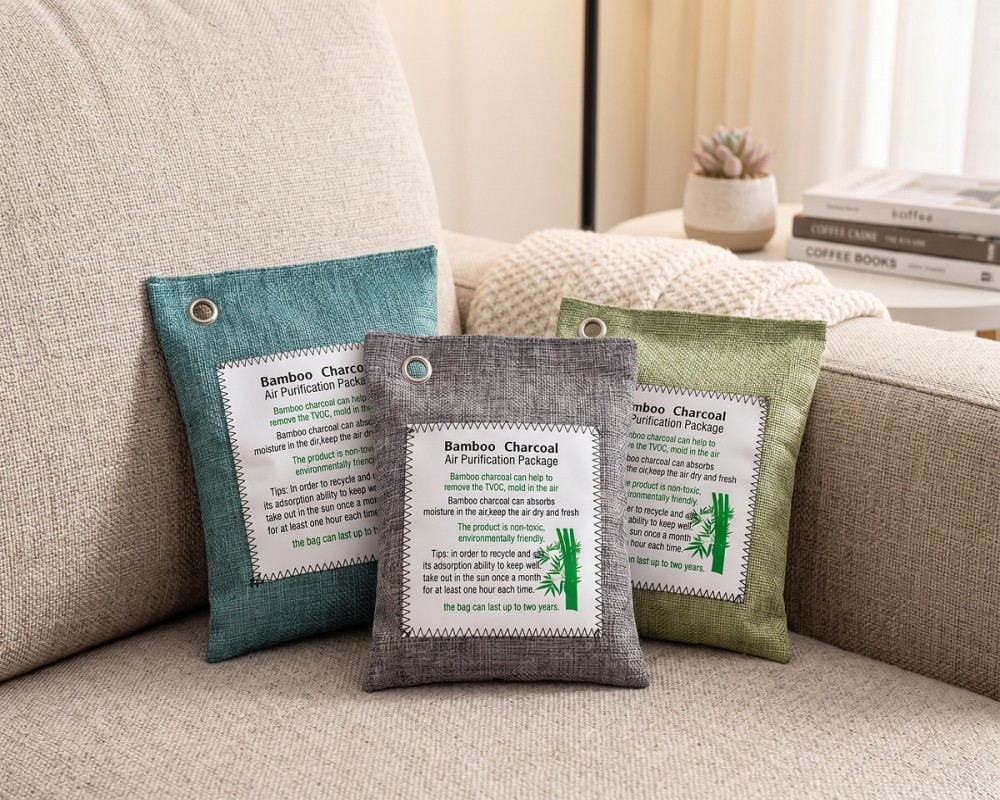
Yes—logo application should be selected together with the fabric, pouch construction and retail pack. A print that works on one faux-linen weave may not reproduce the same way on another color or texture.
Review customization methodsConfirm dimensions, finished thickness, hanging method and clearance around garments.
Record net fill tolerance, particle format, SMS liner and seam acceptance.
Approve color, artwork scale, position, label construction and eyelet finish.
Lock placement, dry-use, care, warning, pack-count and carton information.
A 200g or 250g pouch is a practical development starting point for a standard wardrobe. The final choice should follow internal volume, compartment layout, airflow and the buyer's intended pack promise rather than a universal room-size claim.
Start with one pouch in a compact single-compartment wardrobe. A tall, divided or heavily filled wardrobe may benefit from two pouches placed in separate airflow zones. Sampling in the intended closet remains the best way to set instructions.
Choose an exposed, dry location such as a hanging rail or open shelf. Avoid burying the pouch under clothing, blocking its breathable surfaces or placing it against damp materials.
Yes. Common options include screen printing, embroidery, a front sewn label, a side label or a hang tag. Logo size and position should be approved on the physical sample before bulk production.
No. Bamboo charcoal pouches are commonly developed for odor adsorption. They should not be presented as a substitute for ventilation, leak repair, mold remediation or a purpose-tested desiccant.
Yes. The sample can lock dimensions, net fill, fabric color, liner, seams, eyelet, logo placement, pack count, care copy and retail packaging.
Send the target market, wardrobe type, net fill, quantity, logo and packaging brief. We will reply with a workable sample route.