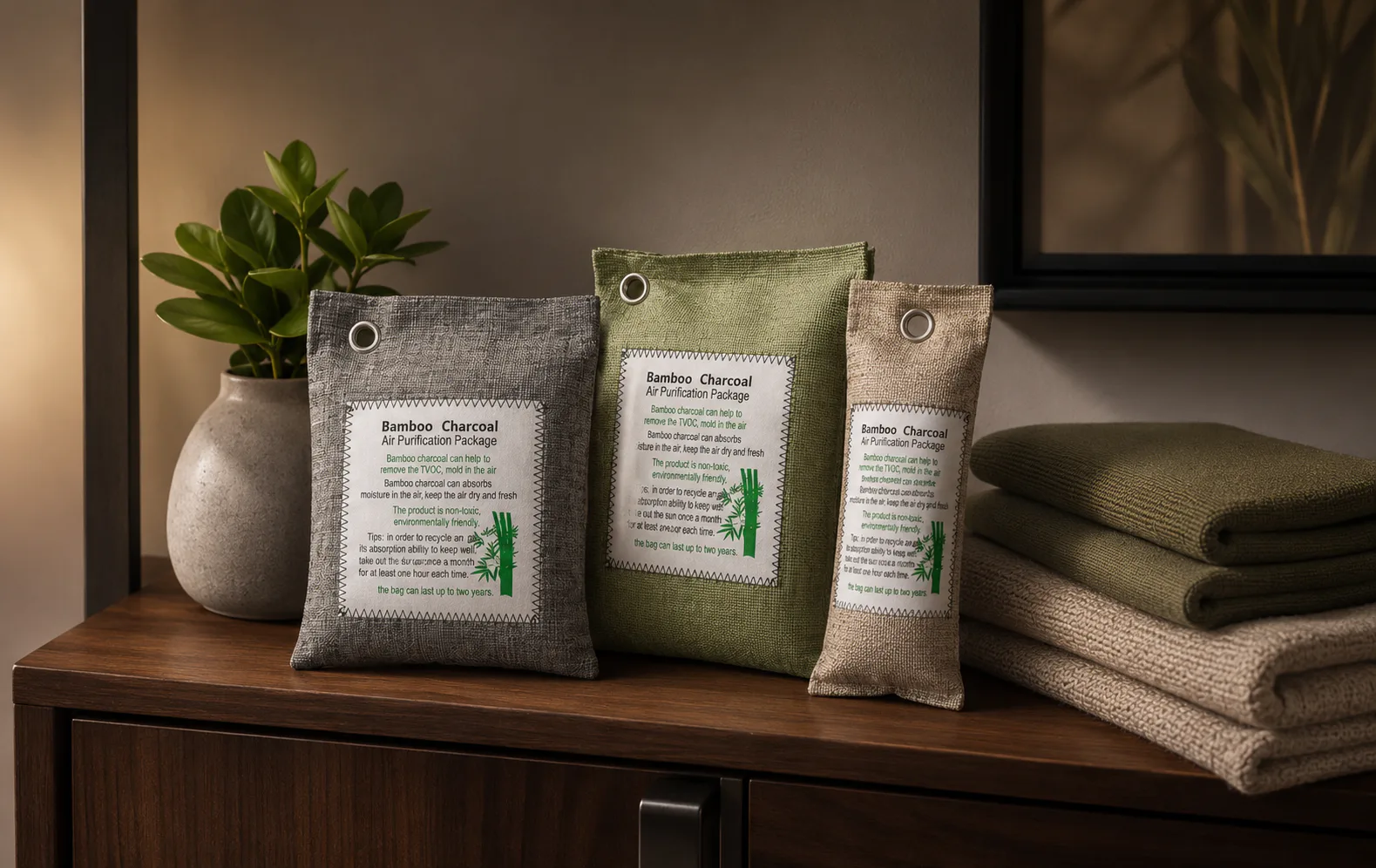

A bamboo charcoal bag can look simple: a breathable textile pouch, a charcoal filling and perhaps an eyelet or hanging loop. For an importer, distributor or private-label brand, however, the commercial product is defined by far more than the pouch alone.
The application, size, filling amount, fabric, seam construction, branding method, set count, care copy and packaging all affect the sample, target cost and production setup. If these decisions are not made before quotation, buyers may compare prices for products that are not actually equivalent.
This guide explains the questions a professional buyer should answer before requesting samples or a bulk quotation. It focuses on creating a clear, testable specification rather than presenting one universal format as suitable for every market.
What Are Private-Label Buyers Actually Sourcing?
Private-label sourcing is not simply adding a logo to an existing charcoal pouch. The buyer is developing a complete offer that must fit a defined use case, sales channel, price position and packaging environment.
A marketplace seller may prioritize compact parcel dimensions and clear care instructions. A retail program may need a color box, barcode position, shelf-facing artwork and master-carton marks. A promotional buyer may focus on logo visibility and a specific delivery date. A distributor may require several sizes under one consistent packaging system.
Tell the supplier where the product will be used, how it will be sold, the expected set count, target quantity and intended price positioning. This produces a more useful recommendation than asking only for a standard charcoal bag.
Define the Application Before the Product Specification
The intended environment determines the practical shape of the product. Closet and wardrobe programs may use wider hanging pouches. Shoe-care products usually need compact pairs that fit inside footwear. Car formats may use an eyelet, loop or headrest-compatible construction. Pet-area products may require a format suited to nearby enclosed storage rather than direct animal contact.
Questions to answer before sampling
- Where will the consumer place or hang the product?
- Is the product sold as one pouch, a pair, a two-pack or a multi-pack?
- Does the channel require compact parcel dimensions or retail shelf presentation?
- Will the product be used in shoes, wardrobes, cars, gym bags, lockers or storage cabinets?
- What care and refresh instructions can be communicated clearly for the chosen format?
Defining the application first prevents a common problem: approving a visually attractive sample that does not fit the final use environment or packaging structure.
Select Pouch Size, Fabric and Construction
Size and fabric influence appearance, filling distribution, packing volume and perceived product value. Buyers should treat them as connected decisions rather than independent selections.
| Specification | Buyer consideration | Confirm by sample |
|---|---|---|
| Dimensions | Application fit, pack count and carton efficiency | Finished length, width and usable area |
| Outer fabric | Breathability, texture, color and brand positioning | Hand-feel, shade and visual consistency |
| Seam construction | Shape retention and charcoal-dust containment | Stitching, closure and edge finish |
| Eyelet or loop | Hanging use, orientation and added production steps | Position, metal finish and pull resistance |
| Label or print area | Logo visibility and artwork limitations | Placement, color and legibility |
Request the supplier to document the approved sample dimensions and construction. A photo alone is not sufficient because perspective and filling distribution can make two different formats look similar.
Specify Bamboo Charcoal Filling Without Overpromising
Bamboo charcoal has a porous surface that can support adsorption of unwanted odors in enclosed spaces. Final user experience depends on charcoal selection, filling amount, pouch construction, environment, moisture exposure and product care.
For that reason, sourcing documents should avoid relying on a single broad performance promise. Buyers should instead confirm the filling material, agreed filling weight, checking method and any market-specific testing or documentation requirements.
Useful points to place in the specification
- Filling material and agreed reference sample
- Target filling weight and acceptable production tolerance
- Method used to check weight during production
- Required dust-control and seam review
- Care language for keeping the product dry and refreshing it as instructed
If your market requires a specific claim, laboratory method or compliance statement, define it before artwork approval. Packaging claims should match the evidence available for the final product—not assumptions based on the raw material alone.
Plan Branding and Retail-Ready Packaging
Branding method changes both appearance and production setup. Common routes can include a sewn label, side label, direct print, hang tag or branded packaging. The best option depends on fabric texture, artwork detail, order quantity and target cost.
Packaging should be designed around the channel. Bulk export packing may be appropriate for a buyer completing final packing locally. Marketplace or retail programs may require a PE or OPP set, paper sleeve, color box, gift format or other agreed structure.
Artwork should confirm more than the front panel
- Logo file, colors and minimum readable size
- Product name, set count and net content description
- Usage, care and storage instructions
- Country-of-origin and importer information where required
- Barcode, warning, recycling and market-specific compliance areas
- Inner-pack and master-carton marks
Approve a packaging mock-up together with the physical product sample. This reveals fit, orientation and visual-balance issues before bulk printing.
Confirm Sampling, Quality Control and Documentation
The approved sample should become a production reference. Buyers and suppliers should record which details are visual references and which are measurable specifications.
Confirm charcoal source, fabric option, color and accessory finish.
Review dimensions, filling distribution, seams, logo position and pack fit.
Approve print-ready files, care copy, barcode placement and carton marks.
Define weight, stitching, appearance and packing checks before production.
Confirm finished goods, set count, packaging and export-carton condition.
Documentation needs vary by market and buyer. Ask for available material information, testing references, packing lists and order-specific inspection records early enough to review them before shipment.
Build a Commercial Brief Suppliers Can Quote Accurately
A complete request for quotation reduces back-and-forth and makes supplier comparisons more meaningful. Your first brief does not need to contain every final answer, but it should show the intended commercial direction.
Include these details in the first inquiry
- Target market and buyer type
- Primary application and preferred pouch format
- Estimated size and filling-weight range
- Fabric color, eyelet or loop requirements
- Logo method and available artwork
- Set count and packaging direction
- Expected order quantity and reorder potential
- Target launch or required delivery window
When the specification is still open, state which decisions need supplier guidance. A good development conversation separates fixed requirements from negotiable options.
Frequently Asked Buyer Questions
Can the pouch dimensions and filling weight be customized?
Yes. Common formats can provide a starting point, while final dimensions and filling weight should be confirmed against application, packaging, target cost and the approved sample.
Can a supplier add our logo and retail packaging?
Private-label routes can include labels, print, hang tags and packaging artwork. Feasibility depends on fabric, artwork, process and quantity, so the complete branding route should be reviewed during sampling.
Should buyers approve samples before bulk production?
Yes. Sampling is the recommended stage for confirming dimensions, material, filling, construction, branding and packaging before the production specification is released.
Is there one standard MOQ for every bamboo charcoal bag?
No universal quantity applies to every project. Fabric color, logo method, packaging, set count and production setup can affect the workable MOQ. Share the target quantity when requesting a quotation.
Final Private-Label Sourcing Checklist
Before confirming an order, make sure the product and commercial documents describe the same item. The physical sample, artwork, specification, packing requirement and quotation should agree on the essentials.
- Application and target channel are clearly defined.
- Pouch dimensions, fabric, construction and accessories are approved.
- Filling material, target weight and checking method are documented.
- Logo placement, care copy and packaging artwork are approved.
- Set count, inner packing and master-carton requirements are confirmed.
- MOQ, lead time, inspection stage and shipment documents are understood.